Why You’re Waking Up Hot
Your answers suggest your sleep may be influenced by body temperature shifts or hot flashes.
Many women in perimenopause experience temperature changes that fragment sleep and trigger night sweats.
See My Hormones in Real Time →Higher nighttime body temperature can fragment sleep and trigger night sweats.
Why we think this
You experience night sweats or wake up feeling hot.
You notice temperature changes during sleep.
Your sleep is disrupted by overheating.
What this pattern often looks like
Waking sweaty or overheated
Throwing off blankets during the night
Difficulty falling back asleep
Sleep quality changes from night to night
Temperature sensitivity during the day
Why symptoms aren't enough
Symptoms can point to a pattern, but they can't confirm it. Many women with similar symptoms have very different hormone patterns.
Only daily hormone data can show whether this pattern matches your body.
Symptoms suggest. Hormones reveal.
Your answers (symptoms)
Possible pattern
Your hormone data (the truth)
Wearables tell you HOW you slept.
Oova tells you WHY.
Connect both to get the full picture.
Wearables track
Oova measures
Hormones + Sleep
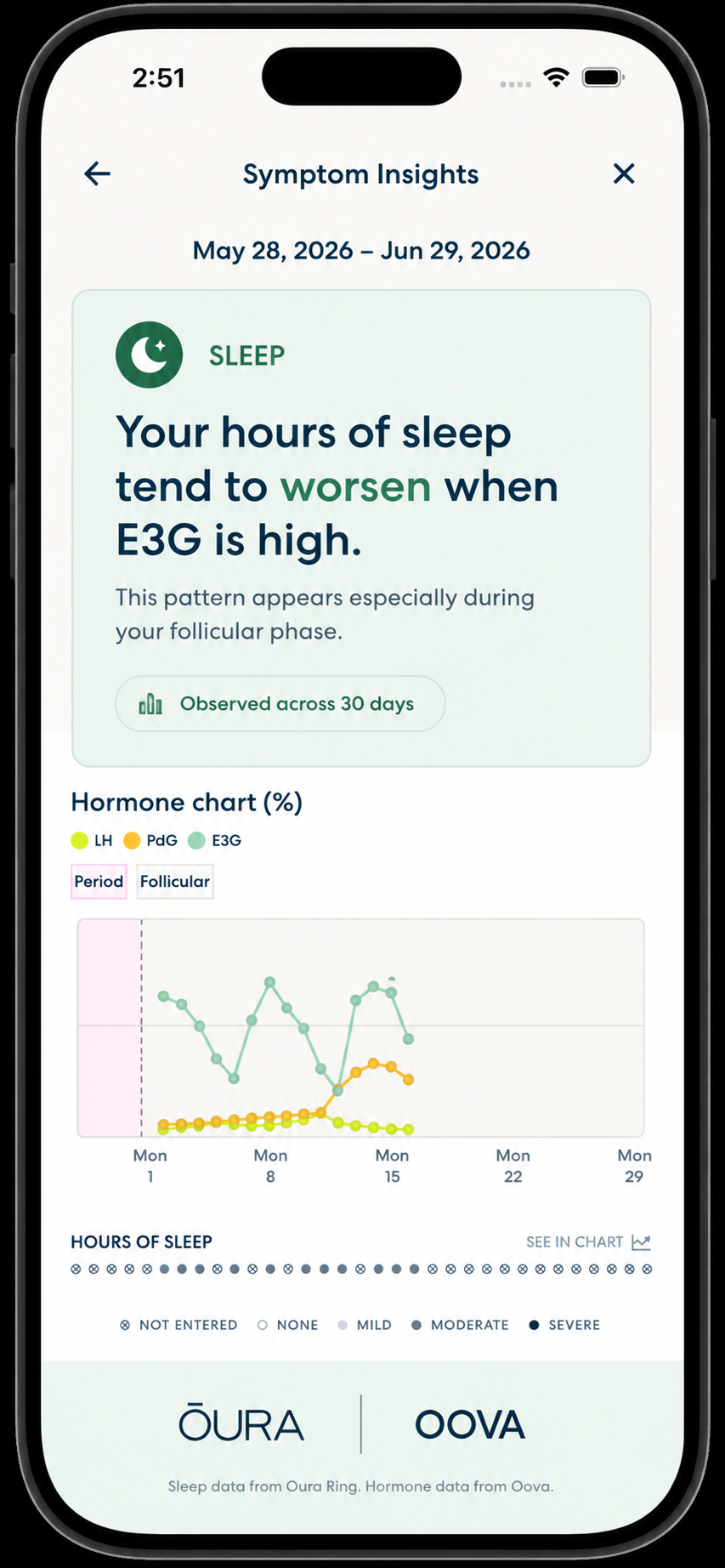
When you connect Oura, you can see how your hormone changes align with your sleep and recovery.
The most complete picture of your hormone and sleep health
By measuring your hormones every day and pairing that data with your Oura metrics, you can see the patterns behind your sleep, energy, and recovery.
15,000+
Women
Trust Oova
500+
Clinicians
Use Oova to support patient care
3M+
Hormone Measurements
Helping women uncover patterns
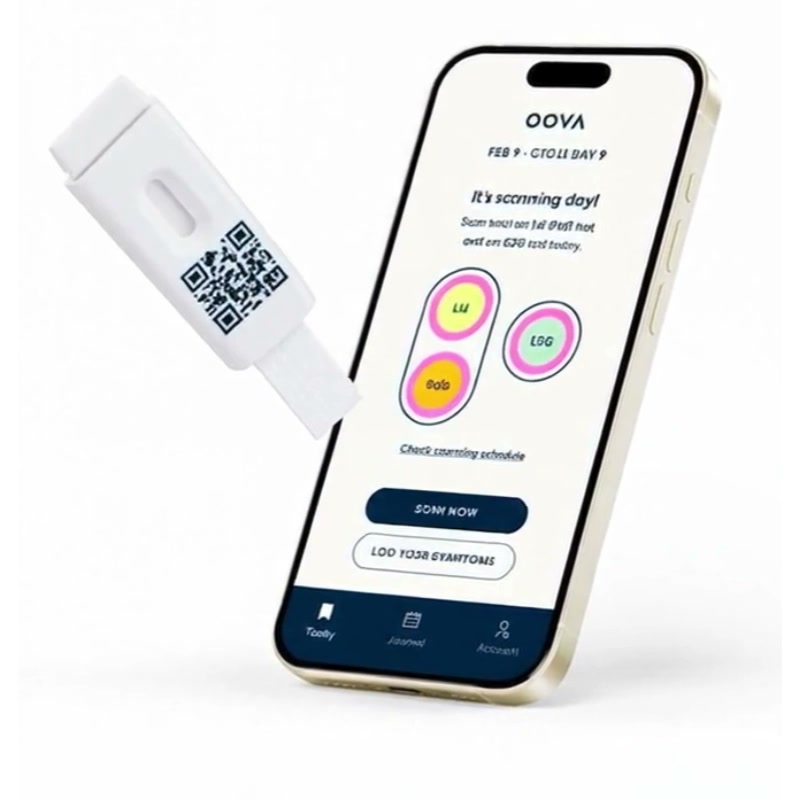
It starts with your Oova Kit
Measures 3 key hormones (E3G, PdG, LH)
Tracks ovulation so you can see the full picture
At-home, easy to use, and clinically validated
Insights in the Oova app
Secure · Private · HIPAA Compliant
This result isn't a diagnosis. It's a hypothesis based on your answers. The best way to understand what's driving your sleep is to compare your symptoms with your actual hormone patterns over time.