If you have PCOS and you're trying to conceive, the most important thing to know isn't your diagnosis, it's whether you're actually ovulating. This guide explains the difference between anovulatory and ovulatory PCOS, why standard LH tests miss the distinction, and what daily hormone tracking reveals that no OPK can.

If you have PCOS and you're trying to conceive, the most important thing to know isn't your diagnosis, it's whether you're actually ovulating. This guide explains the difference between anovulatory and ovulatory PCOS, why standard LH tests miss the distinction, and what daily hormone tracking reveals that no OPK can.
If you have PCOS and you're trying to get pregnant, you've probably spent a lot of time tracking your cycle. Maybe you're using ovulation predictor kits. Maybe you're watching for symptoms, cervical mucus changes, a twinge of pain mid-cycle, a shift in your basal body temperature. Maybe you're doing all of it, and you still aren't sure whether you're actually ovulating.
Here's the thing most people with PCOS don't get told early enough: PCOS doesn't affect everyone's ovulation the same way. Some people with PCOS ovulate, just irregularly or unpredictably. Others don't ovulate at all, or ovulate so infrequently that the chances of timing intercourse correctly drop dramatically.
That distinction, anovulatory PCOS versus ovulatory PCOS, changes everything about how you approach trying to conceive.
What Is Anovulatory PCOS?
Anovulation means you're not releasing an egg. An anovulatory cycle is one where you bleed, or don't, but no ovulation occurred. You can have what looks like a period without having ovulated at all. The bleed happens because estrogen builds up the uterine lining without the progesterone surge that follows ovulation, and eventually the lining sheds. It looks like a period. It isn't one.
In PCOS, anovulation is common because the hormonal environment that should trigger ovulation is disrupted. Elevated androgens (like testosterone), high baseline LH levels, and insulin resistance can all interfere with the normal signaling cascade that leads to follicle maturation and egg release.
In anovulatory PCOS specifically:
- Follicles develop but stall before releasing an egg
- LH may be chronically elevated, creating false signals
- Cycles are often long, irregular, or absent
- Progesterone never rises, because there's no corpus luteum to produce it
- Pregnancy is not possible in these cycles
For someone trying to conceive, anovulatory cycles mean that no matter how well you time intercourse, there is no egg available to fertilize.
What Is Ovulatory PCOS?
Ovulatory PCOS is real, and it's more common than many people realize. These individuals meet the diagnostic criteria for PCOS, typically polycystic ovary morphology on ultrasound, elevated androgens, and/or a cluster of symptoms like irregular cycles, acne, or hair changes, but they do ovulate, at least some of the time.
The pattern in ovulatory PCOS often looks like:
- Irregular cycle lengths (longer than 35 days, or varying significantly cycle to cycle)
- Delayed ovulation, ovulating on cycle day 21, 28, or even later instead of the textbook day 14
- Unpredictable timing, so that ovulation happens in a different part of the cycle each month
- A shorter or weaker luteal phase following ovulation
The critical distinction: if you have ovulatory PCOS, conception is biologically possible, but only if you can accurately identify when ovulation is actually happening. Timing intercourse based on a 28-day cycle assumption will fail you. And standard OPKs often fail you too.
Why Standard OPKs Are Unreliable for PCOS
Ovulation predictor kits measure LH, the hormone that surges just before ovulation. In a typical cycle, LH spikes once, sharply, 24–36 hours before egg release. In PCOS, this straightforward pattern often breaks down in two important ways.
First, many people with PCOS have chronically elevated baseline LH. This means an OPK may show a "positive" or near-positive reading for days or even weeks at a stretch, not because ovulation is imminent, but because LH is always running high. This is exactly why a positive OPK doesn't always mean ovulation happened.
Second, in anovulatory cycles, LH can surge without the follicle ever successfully releasing an egg. The surge happens. The OPK reads positive. And then, nothing. No ovulation. No corpus luteum. No progesterone rise. Standard OPKs were simply not designed to catch this.
The result is that someone with PCOS can follow OPK instructions perfectly, see a positive reading, time intercourse accordingly, and still not be in a fertile window, because the LH surge didn't result in an egg release.
The Only Way to Know If You Ovulated: Progesterone
This is the piece that changes everything for PCOS TTC.
Progesterone is produced by the corpus luteum, the structure left behind after an egg is released. It only rises if ovulation actually occurred. If you ovulated, progesterone should climb in the days following the LH surge and remain elevated through the luteal phase. If you didn't ovulate, progesterone stays low, regardless of what your LH test showed.
This is why confirming ovulation with PCOS requires tracking progesterone, not just LH. LH tells you something may be about to happen. Progesterone tells you whether it did.
The clinical threshold most commonly used: progesterone levels (or PdG, the urine metabolite of progesterone) should rise and remain elevated for several consecutive days post-LH surge to confirm ovulation occurred and the corpus luteum is functioning. A single elevated reading isn't enough, the pattern matters.
Why the Timing Problem Is Bigger Than Most People Think
Even for people with ovulatory PCOS, delayed ovulation creates a significant TTC challenge that goes beyond "just track longer."
If you're ovulating on cycle day 21 or later, and you stop tracking after day 14 assuming you missed your window, you'll miss your fertile days entirely. If your luteal phase is short, say, 10 days instead of 14, the implantation window is compressed, and even a successfully fertilized egg may not have time to implant before progesterone drops.
PCOS ovulation patterns are genuinely different from textbook patterns, and the standard fertility advice built around a 28-day cycle with day-14 ovulation doesn't apply. You need to track your actual pattern, not an assumed one.
Daily hormone tracking, measuring LH, estrogen, and progesterone each day, gives you the data to see:
- When your LH surge actually occurs (which may be much later than expected)
- Whether estrogen is rising appropriately before ovulation
- Whether progesterone rose after the surge (confirming ovulation happened)
- What your personal fertile window looks like across multiple cycles
This is particularly important for PCOS because the pattern varies cycle to cycle. One month you may ovulate on day 18. The next day, 26. Without data across multiple cycles, you can't predict, you can only observe. And observation requires measuring more than LH.
Anovulatory vs. Ovulatory PCOS: What Each Means for Your TTC Plan
If you have ovulatory PCOS: Your primary challenge is finding your fertile window accurately. OPKs alone are insufficient. You need progesterone confirmation to know ovulation occurred and assess luteal phase quality. Tracking across multiple cycles will reveal your personal pattern, the typical timing of your ovulation, the length of your luteal phase, and whether progesterone is rising adequately post-ovulation.
If luteal phase defect (short luteal phase or insufficient progesterone) emerges in your data, that's clinically actionable, your provider can evaluate whether progesterone support is appropriate. Data you bring to that appointment matters. PCOS treatments for ovulatory PCOS often focus on optimizing the timing and quality of each cycle, rather than inducing ovulation.
If you have anovulatory PCOS: The challenge is different. If you consistently see LH activity without a subsequent progesterone rise, you're not ovulating, and no amount of timing optimization will result in pregnancy in those cycles. This is important information to have, and to share with your provider, as soon as possible. Waiting months before investigating whether ovulation is occurring can cost significant time when time is a concern.
Anovulatory PCOS is typically addressed medically, letrozole and clomiphene are first-line ovulation induction agents, but the starting point is confirming that anovulation is actually what's happening. Many women go months before getting this confirmed because the standard diagnostic tools (a single progesterone blood draw, cycle day 3 FSH) don't capture the pattern over time.
If you're trying to conceive with PCOS, knowing whether you're anovulatory or ovulatory is the first question to answer. Everything else flows from there.
What Daily Hormone Data Looks Like for PCOS
Across cycles, daily hormone tracking typically reveals one of a few patterns in people with PCOS:
Pattern 1, Delayed but confirmed ovulation: LH surges later than typical (day 18–28+), followed by a clear progesterone rise and sustained luteal phase. Ovulation occurred. Fertile window is later than assumed. The fix is tracking later in the cycle.
Pattern 2, LH activity without progesterone rise: LH elevates or surges, but progesterone never follows. This is an anovulatory cycle, the surge happened but no egg was released. This may repeat across multiple cycles or alternate with ovulatory cycles.
Pattern 3, Irregular and unpredictable: Some cycles ovulatory, some not. Timing varies widely cycle to cycle. This pattern requires multi-cycle tracking to identify any emerging regularity and to understand what percentage of cycles are actually fertile.
Pattern 4, Short luteal phase: Ovulation occurs but progesterone drops too quickly, fewer than 10 days of elevated progesterone post-ovulation. This can prevent successful implantation even when ovulation and fertilization occur.
Each of these patterns has different clinical implications, and none of them are visible from an OPK alone.
The Data Your Doctor Actually Needs
One of the most consistent frustrations among people with PCOS trying to conceive is feeling dismissed at appointments, told to "just keep trying," given a Clomid prescription without real investigation of what their cycles are doing, or told their one-time progesterone draw was "normal" when it was drawn at the wrong point in the cycle.
Daily hormone data changes that conversation. When you walk in with several cycles of LH, estrogen, and progesterone readings, your provider can see your actual pattern, not guess at it. They can see whether your LH surges are resulting in ovulation. They can assess luteal phase length and progesterone adequacy. They can make treatment decisions based on your biology, not population averages.
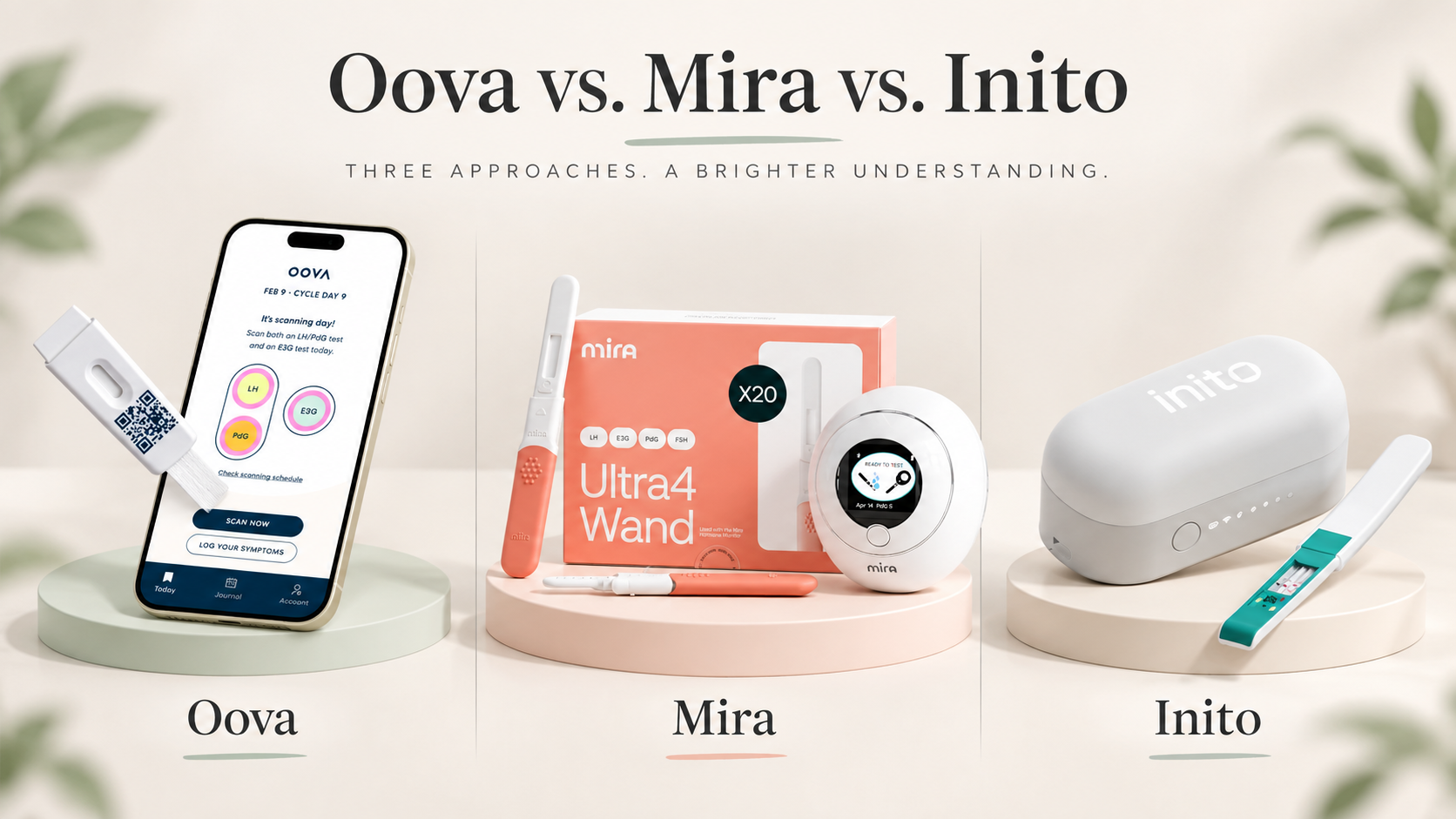
Oova's Fertility Hormone Kit tracks LH, estrogen (E3G), and progesterone (PdG) daily from home, with results that sync to your app and generate HIPAA-compliant provider-ready reports. For PCOS specifically, the combination of all three hormones daily, not just LH, is what makes the data clinically meaningful.
If you're TTC with PCOS and you're not sure whether you're ovulating, that's the question to answer first. Everything else, timing, treatment, next steps, depends on it.
Track your hormones daily, confirm ovulation, and bring real data to your next appointment. Shop the Oova Fertility Hormone Kit → HSA & FSA eligible. Free shipping.
Frequently Asked Questions
Can you get pregnant with anovulatory PCOS?
Not in anovulatory cycles, because no egg is released. However, many people with anovulatory PCOS respond well to ovulation induction (letrozole, clomiphene) and go on to conceive. Confirming anovulation is occurring, rather than delayed ovulation, is the critical first step.
How do I know if I'm ovulating with PCOS?
The only reliable way to confirm ovulation in PCOS is to track progesterone after your LH surge. If progesterone rises and remains elevated for several days, ovulation occurred. If it stays low, it likely didn't, regardless of what your OPK showed. Daily hormone tracking with an at-home kit that measures both LH and progesterone gives you this information without a blood draw.
What does an anovulatory cycle feel like?
Many anovulatory cycles feel identical to regular cycles, you may have cramping, PMS symptoms, and bleeding. The bleed in an anovulatory cycle is a withdrawal bleed caused by estrogen fluctuation, not a true period. Symptom-based tracking alone cannot reliably distinguish anovulatory from ovulatory cycles.
Can PCOS cause both anovulatory and ovulatory cycles?
Yes. Many people with PCOS have a mix, some cycles where ovulation occurs (possibly late) and some where it doesn't. This is why tracking across multiple cycles matters. A single progesterone blood draw in one cycle doesn't tell you the full picture.
Does a positive OPK mean I ovulated?
Not necessarily, especially with PCOS. A positive OPK confirms an LH surge. It does not confirm that the follicle released an egg. Chronically elevated LH (common in PCOS) can cause persistent positive readings, and LH can surge in cycles that turn out to be anovulatory. Progesterone confirmation is the only way to know.
About the author
Sources
- Balen, A.H., et al. (2016). The management of anovulatory infertility in women with polycystic ovary syndrome: an analysis of the evidence to support the development of global WHO guidance. Human Reproduction Update, 22(6), 687–708.
- Teede, H.J., et al. (2023). Recommendations from the 2023 international evidence-based guideline for the assessment and management of polycystic ovary syndrome. Journal of Clinical Endocrinology & Metabolism, 108(10), 2447–2469.
- Christopoulos, G., et al. (2017). Factors affecting embryo quality in endometriosis-associated infertility. Frontiers in Surgery, 4, 57.
- Prior, J.C. (2011). Progesterone for symptomatic perimenopause treatment – Progesterone politics, physiology and potential for perimenopause. Facts, Views & Vision in ObGyn, 3(2), 109–120.
- Rotterdam ESHRE/ASRM-Sponsored PCOS Consensus Workshop Group. (2004). Revised 2003 consensus on diagnostic criteria and long-term health risks related to polycystic ovary syndrome. Fertility and Sterility, 81(1), 19–25.
- Vermeulen, N., et al. (2023). ESHRE evidence-based guideline on ovarian stimulation for IVF/ICSI. Human Reproduction Open, 2023(2).
- Su, H.W., et al. (2017). Detection of ovulation, a review of currently available methods. Bioengineering & Translational Medicine, 2(3), 238–246.
About the Oova Blog:
Our content is developed with a commitment to high editorial standards and reliability. We prioritize referencing reputable sources and sharing where our insights come from. The Oova Blog is intended for informational purposes only and is never a substitute for professional medical advice. Always consult a healthcare provider before making any health decisions.