You've started HRT, now what? This complete 90-day guide walks you through exactly what to expect week by week, target hormone levels at each stage, when symptoms should improve, common side effects and how to manage them, and how to track your progress. Written by a registered nurse specializing in women's hormone health.

You've started HRT, now what? This complete 90-day guide walks you through exactly what to expect week by week, target hormone levels at each stage, when symptoms should improve, common side effects and how to manage them, and how to track your progress. Written by a registered nurse specializing in women's hormone health.
You've made the decision. You've talked to your doctor, weighed the risks and benefits, and picked up your first prescription for hormone replacement therapy (HRT).
Now you're standing in your bathroom holding that pill or patch, and thinking: What happens next?
When will you feel better? What side effects should you expect? How will you know if it's working? What should your hormone levels look like?
You're not alone in wanting a roadmap.
After years of working with women starting HRT, I've learned that the first 90 days are critical and often confusing. You're navigating side effects, waiting for relief, wondering if you need a dose adjustment, and trying to figure out if what you're experiencing is "normal."
This guide gives you a realistic, week-by-week picture of what to expect in your first three months on HRT including:
- A detailed timeline of symptom improvement
- Target hormone levels at each stage
- Common side effects (and when they resolve)
- Red flags that require medical attention
- How to track your response
- When to expect dose adjustments
Let's walk through your first 90 days together.
Before You Start: Setting Realistic Expectations
First, the truth about HRT.
It's not a magic pill. Relief doesn't happen overnight. Your body needs time to adjust to the hormones, your receptors need time to respond, and finding the right dose is often a process.
What you SHOULD expect:
- Gradual symptom improvement over weeks, not days
- Some symptoms resolve faster than others
- Potential temporary side effects in the first 2-4 weeks
- Possible dose adjustments after the first 1-3 months
- 70-90% symptom reduction by 12 weeks (if dose is right)
What's NOT realistic:
- Complete symptom elimination by week 2
- Zero side effects
- One dose that's perfect forever
- Feeling "20 years old again"
With that context, let's dive into your week-by-week journey.
Week 1-2: The Adjustment Phase
What's Happening in Your Body
When you start HRT, you're introducing exogenous hormones that your body hasn't had in consistent amounts. Your hormone receptors (especially in your brain, uterus, and breasts) begin responding to this signal.
Typical hormone levels:
- Estradiol: May rise from baseline its current baseline by (10-30 pg/mL)Progesterone: Building in your system if you're taking it daily
What you might notice:
Possible improvements (subtle):
- Slightly better sleep (if you're one of the lucky ones)
- Marginally to moderately less frequent hot flashes
- A sense of "something is changing" (hard to quantify)
Common side effects:
- Breast tenderness: This is THE most common early side effect. Your breast tissue is responding to estrogen. Usually peaks in weeks 2-3, then improves.
- Bloating: Especially if taking oral estrogen or progesterone
- Mild nausea: More common with oral estrogen
- Spotting/breakthrough bleeding: Particularly if you're still perimenopause (not fully postmenopausal)
- Headaches: Usually mild and temporary
- Mood swings: Paradoxically, you might feel MORE emotional initially as hormones fluctuate
Target Hormone Levels (Week 2)
Estradiol:
- Still building, likely 30-50 pg/mL if on standard starting dose
- Goal: Steady rise, not target range yet
Progesterone:
- If taking 100-200mg oral: Should measure 5-15 ng/mL (2-3 hours post-dose)
What You Should Do
✓ Track baseline symptoms: Before hormones fully kick in, document current symptom severity (1-10 scale) for comparison later
✓ Give side effects time: Most resolve within 2-4 weeks
✓ Take medications consistently: Same time each day for oral, proper application for patches/creams
✓ Stay hydrated: Helps with bloating and headaches
✓ Don't panic: Feeling "weird" is normal
When to Call Your Doctor
- Severe headaches (migraine-level)
- Heavy bleeding (soaking through pad/hour) or bleeding that lasts for >10 days
- Severe abdominal pain
- Chest pain or difficulty breathing
- Leg pain/swelling (signs of blood clot)
Week 3-4: Early Symptom Relief
What's Happening in Your Body
Your body is adapting to consistent hormone levels. Estrogen receptors in your hypothalamus (temperature control center) are starting to stabilize.
Typical hormone levels:
- Estradiol and Progesterone are finding a more consistent daily level or just not dipping to low if you’re still cycling and have normal shifts throughout the month
What you should notice:
✓ Real improvements:
- Hot flashes decreasing in frequency (maybe 30-50% reduction)
- Night sweats less severe (might wake up less)
- Energy starting to improve slightly
- Brain fog beginning to lift
- Mood stabilizing (less crying, irritability)
✓ Side effects starting to resolve:
- Breast tenderness usually peaks around week 2-3, then improves
- Bloating may still be present but improving
- Nausea typically resolves
What might still be problematic:
- Sleep may still be disrupted (takes longer to improve)
- Vaginal dryness won't improve much yet (tissue takes time to heal)
- Joint pain may not be significantly better yet
Target Hormone Levels (Week 4)
Estradiol:
- Estradiol and Progesterone are finding a more consistent daily level or just not dipping to low if you’re still cycling and have normal shifts throughout the month
What You Should Do
✓ Assess your response: Compare current symptoms to baseline. Are you seeing 30-50% improvement in at least some symptoms?
✓ Continue tracking: Daily symptom journal helps identify patterns
✓ Note which symptoms improved FIRST: Usually vasomotor (hot flashes) respond quickest
✓ Be patient with sleep: This often takes 6-8 weeks to fully improve
Red Flags
- ZERO improvement by week 4: May indicate dose may need to be adjusted or absorption issues with your current HRT type (pill vs patch vs…)
- Worsening symptoms: Rarely, HRT makes some women feel worse (discuss with your doctor)
- New severe side effects: Persistent severe headaches, vision changes, chest pain (discuss with your doctor)
Week 5-8: The Turning Point
What's Happening in Your Body
This is when most women start feeling significantly better. Your hormone levels should be stabilizing at therapeutic levels, and your receptors are fully responding.
Typical hormone levels:
- Estradiol and progesterone: Consistent seady therapeutic levels
What you should notice:
✓ Major improvements:
- Hot flashes reduced by 50-70% (frequency AND intensity)
- Sleeping through the night more often
- Brain fog significantly better (finding words, remembering things)
- Energy levels noticeably improved
- Mood more stable feeling like yourself again
- Anxiety reduced
- Joint pain starting to improve
Symptoms still lagging:
- Vaginal tissue health (takes 8-12+ weeks)
- Skin changes (collagen production is slow)
- Weight/body composition: HRT will not cause weight loss in and of itself but it can help with muscle building for those that are working out. This can thus result in an increased metabolism that can help with body composition(takes longer)
What You Should Do
✓ Evaluate overall response: By week 8, you should have 50-70% symptom reduction. If not, discuss dose adjustment or looking into other causes for your symptoms
✓ Consider lab testing: Some doctors may order labs at 8-12 weeks to check levels if your symptoms are not resolving
✓ Track patterns: Are some days better than others? (Could indicate you need higher dose or different delivery method)
✓ Address remaining symptoms: If vaginal dryness is still severe, ask about adding local estrogen applied directly to the vagina
When Dose Adjustments Happen
Common reasons for increase at 8-12 weeks:
- Hot flashes still frequent (5+ per day)
- Sleep still significantly disrupted
- Estradiol levels below 50 pg/mL (if you are menopausal)
- Only 20-30% symptom improvement
Common reasons for decrease:
- Persistent breast tenderness
- Bloating that doesn't resolve
- Progesterone side effects (fatigue, depression, constipation)
Week 9-12: Optimization Phase
What's Happening in Your Body
By now, your body has fully adapted to HRT. Hormone levels should be steady (if postmenopausal) or remaining more consistently in the therapeutic range if you’re perimenopausal. This is your "new normal."
What you should notice:
✓ Expected results at 12 weeks:
- Hot flashes reduced by 70-90%
- Sleeping 7-8 hours most nights
- Brain fog mostly resolved
- Energy back to pre-perimenopause levels
- Mood stable—feeling like yourself
- Joint pain significantly improved
- Vaginal tissue starting to heal (if on systemic HRT; faster with local vaginal estrogen)
What realistic outcomes look like:
- You'll likely still have occasional hot flashes (1-2 per day vs. 10-15)
- Sleep won't be perfect every night but soooo much better!
- You may still have some energy dips
- But overall, you should feel 70-80% better than before starting HRT
Target Hormone Levels (Week 12)
This is when you establish your maintenance dose.
What You Should Do
✓ Have your 3-month follow-up: Most doctors schedule this around 12 weeks
✓ Bring symptom data: Show your doctor your tracking (makes case for adjustments easier)
✓ Discuss remaining symptoms: What's still bothering you? Is it HRT-related or something else?
✓ Consider home hormone tracking: Helps you see patterns and optimize between appointments
✓ Plan long-term monitoring: How often will you check in? When's your next lab test?
Decision Points at 12 Weeks
If you're feeling 70-90% better:
- Continue current dose
- Monitor for any changes
- Check in with doctor every 6-12 months
If you're only 30-50% better:
- Likely need dose adjustment
- May need to switch delivery method (oral to patch, etc.)
- Consider whether other factors are at play (thyroid, stress, nutrition, lifestyle etc.)
If you're not better at all:
- Discuss whether HRT dose is adequate
- Check hormone levels to confirm absorption
- Consider whether diagnosis is correct (thyroid vs. perimenopause)
- Evaluate for other underlying conditions
Read: Why Your HRT Stopped Working (And How to Fix It)
Hormone Level Targets: The Complete Reference for Women in Menopause.
Here's what you're aiming for across the first 90 days:
Estradiol (E2) Levels
Baseline (before HRT)
- Target Range: 10-30 pg/mL
- What it Means: Low
Week 2
- Target Range: 30-50 pg/mL
- What it Means: Building toward therapeutic range
Week 4
- Target Range: 50-70 pg/mL
- What it Means: Entering therapeutic range
Week 8+ onward
- Target Range: 60-100 pg/mL
- What it Means: Optimal for symptom relief
Important notes:
- These ranges are for serum blood levels
- Timing matters: Mid-week for patches, 2-4 hours post-dose for oral
- Transdermal (patches) often produce steadier levels than oral
- Some women need levels of 100-150 pg/mL for complete symptom relief
Common Side Effects: What's Normal vs. Concerning
Normal (Usually Resolve in 2-4 Weeks)
✓ Breast tenderness
- Very common, peaks week 2-3
- Wear supportive bra
- Should resolve by week 6-8
✓ Bloating
- Especially with oral hormones
- Stay hydrated, reduce salt
- Often improves by week 6
✓ Mild headaches
- Usually temporary adjustment
- Take with food, stay hydrated
- Should resolve by week 4
✓ Spotting/irregular bleeding
- Common if still perimenopause
- Can occur if menopausal but important to let your doctor know
- Usually stabilizes by 3 months
- Track patterns
✓ Mild nausea
- Take with food
- Often resolves in 2-3 weeks
- Switch to transdermal if persistent
Concerning (Call Your Doctor)
Severe headaches/migraines
- Especially with aura
- Could indicate too-high estrogen or contraindication
Heavy bleeding
- Soaking through multiple pads per hour
- Passing large clots
- Bleeding more than 10 days out of the month
Leg pain/swelling
- Signs of blood clot
- Seek immediate care
Chest pain or shortness of breath
- Could indicate cardiovascular issue
- Seek immediate care
Severe depression or mood changes
- Progesterone can worsen depression in some women
- May need dose adjustment or different formulation
How to Track Your Response
Don't rely on memory. Use data to optimize your HRT.
Method 1: Symptom Tracking Journal
What to track daily:
- Hot flash count (and intensity 1-10)
- Sleep quality (hours, times woken)
- Mood (1-10 scale + notes)
- Energy level (morning, afternoon, evening)
- Brain fog severity (1-10)
- Other symptoms (joint pain, vaginal dryness, etc.)
How to use it:
- Week 12: Look back at baseline vs. now
- Identify which symptoms improved MOST vs. LEAST
- Bring to doctor appointments as objective data
Method 2: At-Home Hormone Testing
Why this is a game-changer:
Instead of waiting 8-12 weeks for lab testing, you can track your hormone levels weekly or even daily to see:
- Whether you're reaching therapeutic ranges
- How your levels correlate with symptoms
- If there are patterns (good days vs. bad days)
- When you might need a dose adjustment
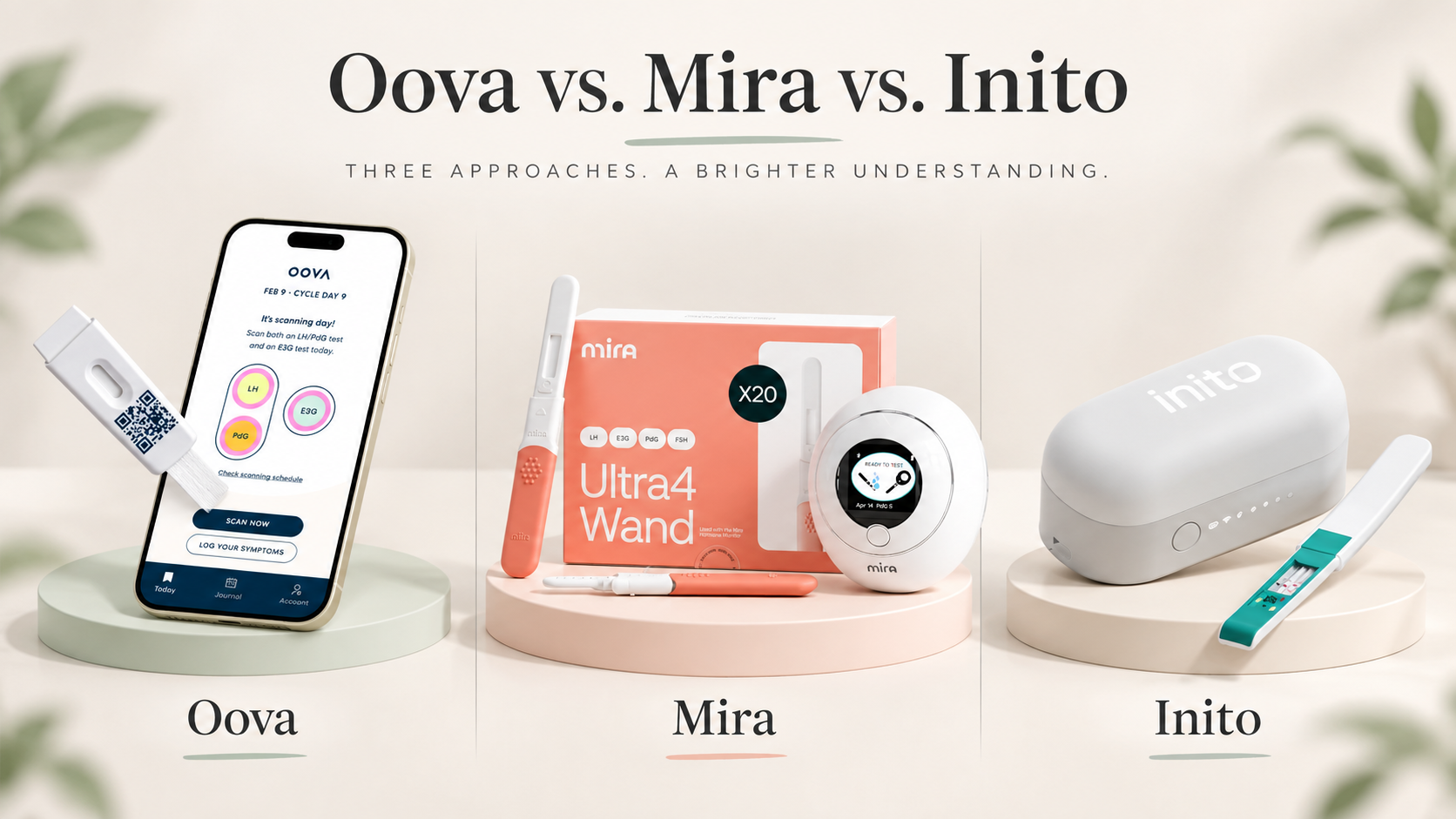
Daily hormone tracking with Oova lets you:
- Monitor estrogen (E3G) and progesterone (PdG) at home
- See trends over time, not just single snapshots
- Catch suboptimal dosing before your next appointment
- Bring objective data to your doctor for faster adjustments
When to Expect Specific Symptom Relief
Different symptoms respond at different rates:
Fast Responders (2-4 weeks)
- Hot flashes (frequency)
- Night sweats
- Energy levels
- Some mood improvement
Moderate Responders (4-8 weeks)
- Brain fog
- Sleep quality
- Anxiety
- Mood stabilization
- Joint pain
Slow Responders (8-12+ weeks)
- Vaginal tissue health
- Skin changes (collagen, elasticity)
- Libido (can take 3-6 months)
- Weight/body composition
- Bone density (6-12 months to measure)
May Need Additional Treatment
- Severe vaginal atrophy (add local estrogen)
- Persistent sleep issues (may need sleep medicine)
- Low libido (may need testosterone)
- Weight gain (requires lifestyle + possible dose adjustment)
Read: Why Your HRT Stopped Working (And How to Fix It)
Factors That Affect Your HRT Response
Not everyone responds the same way. Here's why:
1. Delivery Method
Oral estrogen:
- Goes through liver first (first-pass metabolism)
- Can produce more variable levels
- May not work well if you have liver issues or take other medications
Transdermal (patches, gels, creams):
- Bypasses liver
- More steady hormone levels
- Often better for women who don't respond well to oral
2. Timing of Administration
- Taking oral estrogen with high-fat foods increases metabolism
- Progesterone before bed helps with sleep
- Patches should be rotated to prevent skin irritation
3. Your Metabolism
- Liver enzyme variations affect how quickly you metabolize hormones
- Some women are "fast metabolizers" (need higher doses)
- Weight affects dosing (larger body = may need more)
4. Other Medications
These can interact with HRT:
- Some antidepressants
- Blood thinners
- Thyroid medications
- Anti-seizure medications
5. Still Cycling?
If you're still perimenopause (not fully postmenopausal):
- Your own fluctuating hormones can override HRT effects
- You may have more irregular bleeding
- Symptoms may be less consistently controlled
- May need different dosing strategy (cyclic vs. continuous)
Red Flags: When to Call Your Doctor Before 12 Weeks
Don't wait for your scheduled follow-up if you experience:
Zero improvement by week 6-8
- HRT should produce SOME benefit by 6 weeks
- May indicate dose is too low or wrong formulation
Symptoms worsening
- Rare, but some women feel worse on HRT
- May need different type or different hormones
Severe persistent side effects
- Breast tenderness that doesn't improve by week 6
- Severe bloating that worsens
- Depression/mood issues getting worse
Signs of blood clots
- Leg pain, swelling, warmth
- Shortness of breath
- Chest pain
Unexpected bleeding patterns
- Very heavy bleeding
- Bleeding that doesn't stop
- Postmenopausal bleeding (if you're fully menopausal)
Severe headaches
- Migraines with aura
- New pattern of headaches
- Headaches that don't respond to normal treatment
What Happens After 90 Days?
If HRT Is Working Well
✓ Continue current dose
✓ Check in with doctor every 6-12 months
✓ Monitor for any changes in symptoms
✓ Continue healthy lifestyle habits
If You Need Adjustments
Common adjustments after 3 months:
- Increase estradiol dose (most common)
- Switch from oral to transdermal (or vice versa)
- Add local vaginal estrogen
- Consider adding testosterone (for libido, energy)
Long-Term Monitoring
Every 6-12 months:
- Symptom review
- Physical exam
- Breast exam
- Blood pressure check
Annually:
- Hormone level testing
- Mammogram (starting age 40-50, per guidelines)
- Bone density scan (if at risk for osteoporosis)
- Cardiovascular risk assessment
The Bottom Line: What Success Looks Like at 90 Days
By the end of your first three months on HRT, you should be experiencing:
✓ 70-80% reduction in hot flashes and night sweats
✓ Significantly improved sleep quality
✓ Clearer thinking and better memory
✓ Stable mood feeling like yourself again
✓ Better energy to engage in daily activities
✓ Reduced anxiety and emotional volatility
✓ Improved quality of life overall
You might still have:
- Occasional hot flashes (1-3 per day vs. 10-15)
- Some lingering symptoms that take longer to resolve
- Need for dose adjustments or additional treatments
- Questions about long-term HRT use
But overall, you should feel noticeably better and optimistic about continuing.
If you're NOT seeing these improvements, don't give up on HRT. You may just need a dose adjustment, different delivery method, or additional support.
Track Your First 90 Days with Confidence
Starting HRT is a journey and you don't have to navigate it blind.
Oova's Perimenopause Kit helps you track your hormone response in real-time, so you can:
- See if you're reaching therapeutic estrogen and progesterone levels
- Identify patterns between your hormones and symptoms
- Know when to ask for a dose adjustment (with data to back it up)
- Optimize your HRT faster than waiting 3-6 months between appointments
- Feel confident you're on the right path
Stop guessing. Start tracking.
FSA/HSA Eligible | Free Shipping
FAQ
How long does it take for HRT to start working?
Most women notice initial improvements within 2-4 weeks (especially in hot flash frequency). Significant symptom relief typically occurs by 6-8 weeks. Full benefits may take 3 months or longer. If you see zero improvement by 6-8 weeks, discuss dose adjustment with your doctor.
What should my estradiol level be on HRT?
If you are menopausal: For symptom relief, most women need estradiol levels between 60-100 pg/mL. Some women require higher levels (100-150 pg/mL) for complete relief, while levels below 50 pg/mL rarely provide adequate symptom control. Your optimal level depends on your individual response. If you are perimenopausal your levels on HRT should be higher than pre HRT but you still have significant hormone variations throughout the month - this is part of the menstrual cycle.
Is it normal to feel worse before feeling better on HRT?
Some women experience temporary side effects like breast tenderness, bloating, or mood swings in the first 2-4 weeks. However, you shouldn't feel significantly WORSE overall. If your symptoms worsen or you develop new severe symptoms, contact your doctor—you may need a different formulation or dose.
How do I know if my HRT dose is too low?
Signs include minimal symptom improvement by 6-8 weeks, persistent hot flashes (5+ per day), continued sleep disruption, ongoing brain fog, and hormone levels below therapeutic range (estradiol <50 pg/mL). Read our complete guide: https://www.oova.life/blog/hrt-dose-too-low">How to Know If Your HRT Dose Is Right .
Should I get my hormone levels checked while on HRT?
A single blood test only shows a snapshot but can be helpful if your symptoms are not resolving with your new HRT regimen. At-home tracking provides ongoing insights into your hormone patterns and helps optimize your dose faster
Can I drink alcohol while starting HRT?
Moderate alcohol consumption (up to 7 drinks per week) is generally safe on HRT, but Alcohol in Perimenopause can worsen perimenopause symptoms and may interfere with how your liver metabolizes estrogen. Many women find they tolerate alcohol less well during perimenopause and while adjusting to HRT.
What if I'm still having symptoms after 3 months on HRT?
If you have less than 50% symptom improvement after 12 weeks, you likely need a dose adjustment, different delivery method, or additional treatment. Bring symptom tracking data to your doctor and discuss options. Don't accept "this is as good as it gets" if you're still significantly symptomatic.
About the author
Sources
- North American Menopause Society. (2022). The 2022 hormone therapy position statement. Menopause, 29(7), 767-794.
- Santoro, N., et al. (2016). Menopausal symptoms and their management. Endocrinology and Metabolism Clinics, 45(3), 641-659.
- Stuenkel, C.A., et al. (2015). Treatment of symptoms of the menopause: An Endocrine Society clinical practice guideline. Journal of Clinical Endocrinology & Metabolism, 100(11), 3975-4011.
- The NAMS 2017 Hormone Therapy Position Statement Advisory Panel. (2017). The 2017 hormone therapy position statement of The North American Menopause Society. Menopause, 24(7), 728-753.
- Santen, R.J., et al. (2010). Postmenopausal hormone therapy: An Endocrine Society scientific statement. Journal of Clinical Endocrinology & Metabolism, 95(7 Supplement 1), s1-s66.
- Maclennan, A.H., et al. (2004). Oral oestrogen and combined oestrogen/progestogen therapy versus placebo for hot flushes. Cochrane Database of Systematic Reviews, (4).
- Crandall, C.J., et al. (2023). Management of menopausal symptoms: A review. JAMA, 329(5), 405-420.
- Files, J.A., et al. (2011). Bioidentical hormone therapy. Mayo Clinic Proceedings, 86(7), 673-680.
- Shifren, J.L., & Gass, M.L. (2014). The North American Menopause Society recommendations for clinical care of midlife women. Menopause, 21(10), 1038-1062.
- Simon, J.A., et al. (2020). Patient-reported outcomes with hormone therapy: Timing matters. Climacteric, 23(2), 123-129.
About the Oova Blog:
Our content is developed with a commitment to high editorial standards and reliability. We prioritize referencing reputable sources and sharing where our insights come from. The Oova Blog is intended for informational purposes only and is never a substitute for professional medical advice. Always consult a healthcare provider before making any health decisions.