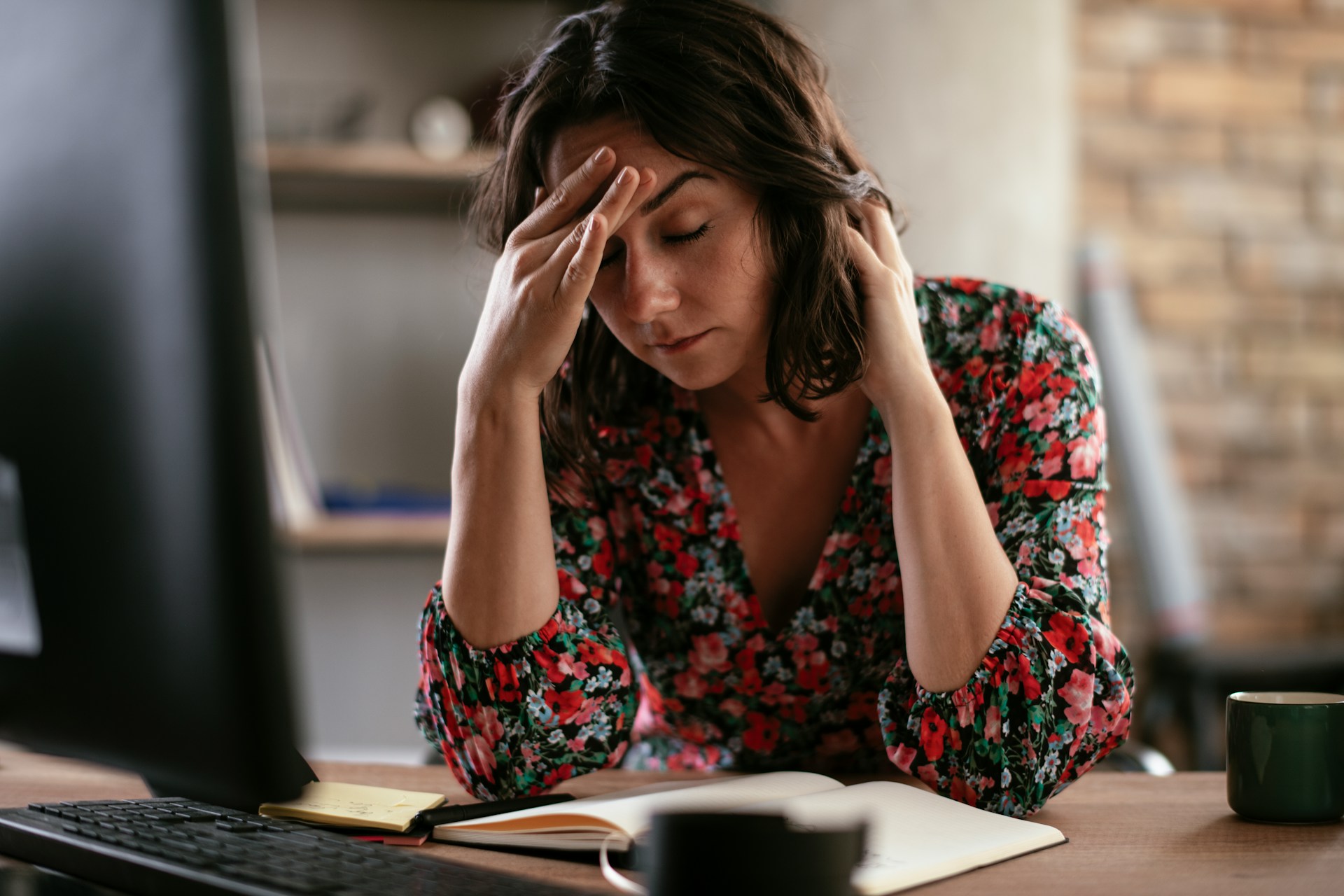
If stress feels more overwhelming during perimenopause, it isn't just your imagination. Learn how changing estrogen, progesterone, cortisol, and blood sugar alter your stress response, and why your body reacts differently than it used to.

If stress feels more overwhelming during perimenopause, it isn't just your imagination. Learn how changing estrogen, progesterone, cortisol, and blood sugar alter your stress response, and why your body reacts differently than it used to.
The meeting was the same kind of meeting you've sat through a hundred times. The email was no different from hundreds of other emails. The to-do list wasn't longer than usual.
But something about it felt unbearable in a way it didn't five years ago.
If you've noticed that your stress threshold has changed, that things that used to roll off you now feel genuinely overwhelming, that you take longer to recover, that some weeks are dramatically harder than others, you're not imagining it. And you're not weaker than you used to be.
During perimenopause, stress doesn't just feel like more stress. It feels different. That difference is physiological: the hormonal systems that once helped buffer your stress response are operating less consistently. The result is a nervous system that reacts more intensely to the same inputs, recovers more slowly, and is more affected by sleep disruption, blood sugar swings, and physical symptoms than it was before.
This isn't a personality shift.
It's a physiology shift.
The same stressor, a different response
Most health content explains that stress raises cortisol. That's true. But it doesn't answer the more interesting question: why does the exact same stressful day feel so much harder than it did five years ago?
The answer isn't that the stressor changed. It's that the physiological environment it's landing in has changed.
Perimenopause changes the environment stress is landing in. Several systems that previously helped buffer stress, before you even noticed them, are operating less consistently during perimenopause.
Estrogen interacts with the HPA axis, the system involved in cortisol regulation. As estrogen becomes more variable during perimenopause, stress responses may become less predictable for some women. The same stressor may feel more intense or take longer to recover from, particularly when sleep and other symptoms are also changing.¹
As ovulation becomes less consistent during perimenopause, progesterone exposure may become lower or more variable. Progesterone is metabolized in the body into allopregnanolone, which interacts with GABA-A receptors that help regulate nervous-system inhibition and calm. When that calming effect diminishes, the nervous system may become more reactive, more easily activated by stressors that previously wouldn't have registered as threats.²
Blood sugar volatility adds another layer. Reduced insulin sensitivity, common during perimenopause as estrogen fluctuates, means blood sugar drops more readily. Those drops can trigger counter-regulatory hormones, including cortisol, which may feel like shakiness, irritability, anxiety, or sudden urgency. This means stress hormones may be elevated not because something stressful happened, but because of a metabolic signal the body interpreted as a physiological cue to respond.
Poor sleep compounds all of this. A woman operating from a higher physiological stress load, accumulated from disrupted sleep night after night, has less buffer available when additional stressors arrive. The system is already under pressure before the day begins.
None of these changes happen in isolation. They reinforce one another. The result isn't simply more stress. It's a different relationship with stress.
Why stress feels physical
One of the most disorienting aspects of perimenopause-related stress is that it often arrives as a physical experience first: a racing heart, a tight chest, sudden warmth, a sense of internal alarm with no identifiable cause.
Hormonal changes during perimenopause can contribute to autonomic symptoms such as palpitations, sweating, or a sense of internal alarm. These may reflect changing hormonal influences on the autonomic nervous system, the system that governs physical stress response. When the calming effects of progesterone metabolism diminish and estrogen becomes less predictable, the balance between sympathetic ("fight or flight") and parasympathetic ("rest and digest") tone may shift.
The result can feel like anxiety even when nothing particularly anxious is happening. For more on how these physical symptoms cluster together and why, see why anxiety, insomnia, and heart palpitations often show up together during perimenopause.
Important: Because symptoms like palpitations, chest tightness, sweating, and shortness of breath can also have cardiac, thyroid, medication-related, or other causes, new or severe physical symptoms should be evaluated clinically. See the section on when to seek medical evaluation at the end of this article.
Because the symptoms overlap, distinguishing hormonal changes from a primary anxiety disorder can be challenging. That's an important conversation to have with your healthcare provider.
Why recovery takes longer
Most women notice this as much as they notice the heightened stress itself. The stressor resolves. But the physiological activation lingers, heart rate takes longer to settle, racing thoughts continue, sleep remains disrupted even after the cause is gone.
Stress recovery depends on the parasympathetic nervous system and is actively supported by adequate sleep, stable blood sugar, and the neurosteroid effects of progesterone metabolism. During perimenopause, all three of these supports are frequently compromised at the same time.
When sleep is disrupted, by hot flashes, early-morning waking, or blood sugar volatility overnight, recovery is impaired before the next day's stressors have even arrived. Why do I keep waking up at 3 AM? covers the specific physiology of early-morning waking and how it interacts with sleep architecture and hormonal changes.
When blood sugar is volatile, the body may continue producing stress-related hormonal responses throughout the day in response to metabolic signals, extending what should have been brief activation into a prolonged state.
When progesterone-related neurosteroid effects are diminished, the nervous system takes longer to return to baseline after activation.
The accumulation of these factors is why stress recovery during perimenopause can feel slow even when the stressor itself was minor. A system that cannot fully recover between stressors accumulates physiological load over time.
Why tolerance changes across the cycle
Many women notice that their stress tolerance varies, some weeks everything feels manageable, others feel genuinely impossible. The variation may track with hormonal changes across the cycle, though individual patterns differ significantly.
Some women notice greater stress sensitivity in the late luteal phase, when estrogen and progesterone fall before menstruation. During this window, the calming neurosteroid effects of progesterone are at their lowest, sleep may be poorer, and blood sugar regulation may be less efficient. The same external stressor may feel more intense in this phase than at other points in the cycle.
During phases when estrogen is rising, typically the follicular phase, some women report better mood or greater resilience. But individual responses vary, and this pattern is not consistent across all women or all cycles.
As perimenopause progresses and cycles become more irregular, this pattern may shift. Cycles without ovulation may create longer stretches without the progesterone rise that typically follows, which could contribute to a different symptom pattern in some women. The predictability that once made the late-cycle stretch manageable, knowing it would pass, may become less reliable.
Understanding the four perimenopause hormone patterns can help contextualize where in the transition this variability tends to be most pronounced.
What your stress fluctuations may be telling you
One of the most useful questions you can ask isn't "Why am I stressed?" It's "When does stress feel different?"
Does heightened stress sensitivity track with the late luteal phase, or does it feel more constant? Is it worse after nights of poor sleep? Does it arrive with physical symptoms, heart racing, warmth, urgency? Does it improve after the period begins? Does it fluctuate in ways that don't obviously track with anything external?
These observations are genuinely informative. They can help distinguish between stress that consistently follows hormonal changes and stress that may have other drivers, relationship, work, health concerns, that deserve direct attention.
The four perimenopause hormone patterns describe how different hormonal trajectories through the transition produce different symptom fingerprints. Stress sensitivity that is episodic and cycle-linked looks different from stress sensitivity that is more constant, and each may reflect different hormonal patterns worth understanding.
Stress-related changes also connect directly to the broader symptom clusters many perimenopausal women experience. Why weight gain, brain fog, and fatigue often have the same root cause covers how the same hormonal and metabolic changes that alter stress response also drive these overlapping symptoms. And why blood sugar feels different during perimenopause goes deeper on how metabolic volatility contributes to both physical stress symptoms and emotional ones.
For more on the broader relationship between stress and perimenopause symptoms, including how chronic stress affects estrogen and progesterone patterns over time, see stress and perimenopause: how it affects your hormones.
When to talk to a clinician
Stress that feels different during perimenopause is common and often hormonally driven. But some stress-related symptoms warrant clinical evaluation rather than self-management.
Seek medical attention for:
- New or worsening chest pain or pressure
- Fainting or near-fainting
- Persistent, severe, or irregular heart palpitations
- Shortness of breath at rest or with minimal exertion
- Severe panic symptoms that interfere with daily function
- Major changes in mood, including thoughts of self-harm
- Symptoms that are rapidly worsening or significantly affecting daily life
Physical symptoms that feel like anxiety during perimenopause, palpitations, chest tightness, sweating, can have cardiac, thyroid, medication-related, or other causes that require evaluation. The experience of increased stress and anxiety during perimenopause is real and hormonally influenced, but it does not exclude other clinical contributors.
What the stress pattern is telling you
Stress that feels disproportionate, recovery that seems slow, overwhelm that arrives from stimuli that used to be manageable, these are not signs that something is wrong with how you're coping. They may be signs that the physiological environment your stress response is operating in has changed.
That change is real. It is not evenly distributed across the cycle, across months, or across women. The pattern of when stress feels worst, which weeks, which combinations of sleep disruption and hormonal shift, is often the most informative dataset available.
Understanding that pattern is not about managing stress better. It's about understanding why your nervous system is responding the way it is, and having that understanding available when you talk to a provider.

Frequently Asked Questions
Why does stress feel so much worse during perimenopause?
Several systems that previously helped buffer stress are operating less consistently during perimenopause. Estrogen interacts with the HPA axis, which regulates cortisol response. Progesterone metabolism supports GABA-A receptor activity, which helps calm the nervous system. Blood sugar becomes more volatile, triggering additional stress hormones. Sleep disruption raises the physiological baseline. Together, these changes can make stress feel more intense and harder to recover from.
Why do small things feel overwhelming during perimenopause?
Stress tolerance has a finite capacity. When sleep is disrupted, blood sugar is volatile, and the nervous system is less buffered, that capacity is reduced before additional stressors arrive. Stimuli that previously felt minor may genuinely exceed a reduced threshold, not because of psychological weakness, but because of accumulated physiological load.
Why does stress sometimes feel like a physical experience?
Hormonal changes during perimenopause can influence the autonomic nervous system, producing physical sensations: palpitations, warmth, chest tightness, sudden urgency. These can feel like anxiety or panic even when nothing specific triggered them. Because these symptoms can also have cardiac, thyroid, or other causes, new or severe physical symptoms should be evaluated clinically.
Why is stress recovery slower during perimenopause?
Stress recovery depends on the parasympathetic nervous system and is supported by sleep, stable blood sugar, and the calming effects of progesterone metabolism. When all three are compromised simultaneously, as often happens during perimenopause, the system takes longer to return to baseline after activation.
Why is stress worse in some weeks than others?
Some women notice greater stress sensitivity during phases when estrogen and progesterone are lower, such as the late luteal phase. Others don't follow a consistent pattern, especially once cycles become irregular. The variation is real for many women, but individual patterns differ significantly.
Can hormone tracking help explain changes in stress?
Reproductive hormone tracking doesn't measure cortisol directly or assess stress response. But tracking estrogen, LH, and progesterone patterns over time may help reveal whether changes in stress, mood, and sleep follow a hormonal pattern, giving you more useful context to discuss with your provider than a single hormone value can.
About the author
Sources
- Gordon JL, et al. "Estrogen fluctuation, sensitivity to stress, and depressive symptoms in the menopausal transition." Psychosomatic Medicine. 2016;78(6):714–725.
- Backstrom T, et al. "Allopregnanolone and mood disorders." Progress in Neurobiology. 2014;113:88–94.
- Girdler SS, Klatzkin R. "Neurosteroids in the context of stress: implications for depressive disorders." Pharmacology & Therapeutics. 2007;116(1):125–139.
- Avis NE, et al. "Duration of menopausal vasomotor symptoms over the menopause transition." JAMA Internal Medicine. 2015;175(4):531–539.
- Spiegel K, et al. "Sleep curtailment is associated with decreased leptin levels, elevated ghrelin levels, and increased hunger and appetite." Annals of Internal Medicine. 2004;141(11):846–850.
About the Oova Blog:
Our content is developed with a commitment to high editorial standards and reliability. We prioritize referencing reputable sources and sharing where our insights come from. The Oova Blog is intended for informational purposes only and is never a substitute for professional medical advice. Always consult a healthcare provider before making any health decisions.

.jpg)