
A focused explanation of persistent absent periods after contraception, including withdrawal bleeding, underlying cycle conditions, method differences, and evaluation.

A focused explanation of persistent absent periods after contraception, including withdrawal bleeding, underlying cycle conditions, method differences, and evaluation.
Three months without a period after stopping the pill is a reason to check for pregnancy and arrange a medical evaluation. Your natural hormone cycle may still be resuming, or an underlying pattern may be becoming visible again.[1,2]
The method matters. A pill, implant, hormonal IUD, and Depo-Provera injection have different effects on ovulation and bleeding. The injection can delay the return of ovulation longer.[3,4]
Here is what can explain the gap, how to count the timeline, and where ovulation tracking fits if you want to conceive.
What is post-pill amenorrhea?
Amenorrhea means absent periods. “Post-pill amenorrhea” describes periods staying absent after you stop oral contraception. The term describes the timing; the cause still needs checking.[1,2]
Combined pills suppress the brain-to-ovary signals involved in ovulation. After stopping, that signaling needs to resume its natural pattern. The brain sends signals, a follicle develops, and the ovary prepares to release an egg.[1,5]
If your periods were regular before the pill, they usually return within about three months. Ovulation can return sooner, sometimes within weeks.[1,6] A first ovulation can therefore lead to pregnancy before any period arrives.
An important explanation for a longer gap is a cycle condition that the pill was masking. PCOS can cause infrequent ovulation. Hypothalamic causes can reduce the brain signals that support the cycle.[5,7]
On the pill, scheduled bleeding may have made your cycle appear regular. After stopping, an earlier irregular pattern can reappear. The timing alone cannot show that the pill caused an underlying condition.
Why a pill bleed differs from a natural period
A typical ovulatory cycle has a sequence. Estrogen rises as a follicle develops, an LH surge helps trigger ovulation, and progesterone rises afterward. When pregnancy hasn't occurred, estrogen and progesterone fall, and the uterine lining sheds.[5,8]
On a combined pill, bleeding during the placebo week happens because medication hormone levels drop. This is a withdrawal bleed. It can happen without the ovulation sequence above.[5]
That explains a common source of confusion. You might stop pills in August, bleed a few days later, and then see no bleeding through November. The August bleed may have been withdrawal bleeding, with natural ovulation still absent or delayed.
Hormonal contraception can also keep the uterine lining thin, so there may be little bleeding. Both ovarian activity and the lining help determine what appears on your calendar.[5]
Our guide to how birth control affects ovulation explains the differences between methods.
Which method did you stop?
Count from the last active pill, implant or IUD removal, or last injection. Keep that date separate from any spotting or withdrawal bleed.
For more on your method, read our guides to Nexplanon and the mini pill and tracking ovulation after hormonal IUD removal.
Pregnancy can occur soon after an implant or IUD is removed.[3] A lack of bleeding during those first weeks provides little information about protection from pregnancy.
Depo-Provera is different because an injection continues releasing medication over time. At three months after the last shot, you may only be reaching the next scheduled injection date. Ovulation can remain suppressed longer.[4]
CDC reviewed studies showing wide variation in ovulation's return after DMPA, with most timelines ranging from 15 to 49 weeks after the last injection. That range describes study findings, rather than a deadline for any one person's first period.[4]
Could you be pregnant despite a negative test?
Pregnancy testing checks hCG, a hormone that rises after implantation. Testing too early can miss a pregnancy, particularly when you don't know when ovulation happened.[9]
Take a test if pregnancy is possible. Follow its instructions, and repeat after a few days if the result is negative and pregnancy remains possible. A negative result from weeks ago cannot cover a newer pregnancy.
For detailed timing and other explanations, read why a period can be late with a negative pregnancy test. Persistent absent periods still need evaluation even after negative tests.[1,2]
What can keep ovulation from returning regularly?
PCOS or a previously irregular cycle
If periods were widely spaced before the pill, that same pattern can reappear afterward. PCOS is a common cause of infrequent ovulation. The pill can create scheduled bleeding while that tendency remains in the background.[5]
A history of acne, increased facial hair, or long cycles may help explain the pattern. These clues guide testing; they are also features that can have other causes.[2]
Reduced brain-to-ovary signaling
The hypothalamus is a part of the brain that helps control reproductive hormone signals. When available energy is too low, that signaling can slow. Heavy training demands and psychological stress can also contribute.[7]
With less stimulation reaching the ovaries, estrogen may fall and ovulation may pause. This is called functional hypothalamic amenorrhea. The assessment considers eating patterns, exercise, stress, and other possible medical causes.[7]
If you began contraception years ago, your current circumstances may differ substantially from your pre-pill routine. A cycle change after stopping may reflect something that developed during those years.
Thyroid, prolactin, or ovarian changes
Thyroid conditions and elevated prolactin can interfere with reproductive signaling. Prolactin normally supports milk production, which helps explain why breastfeeding can delay periods.[2,10]
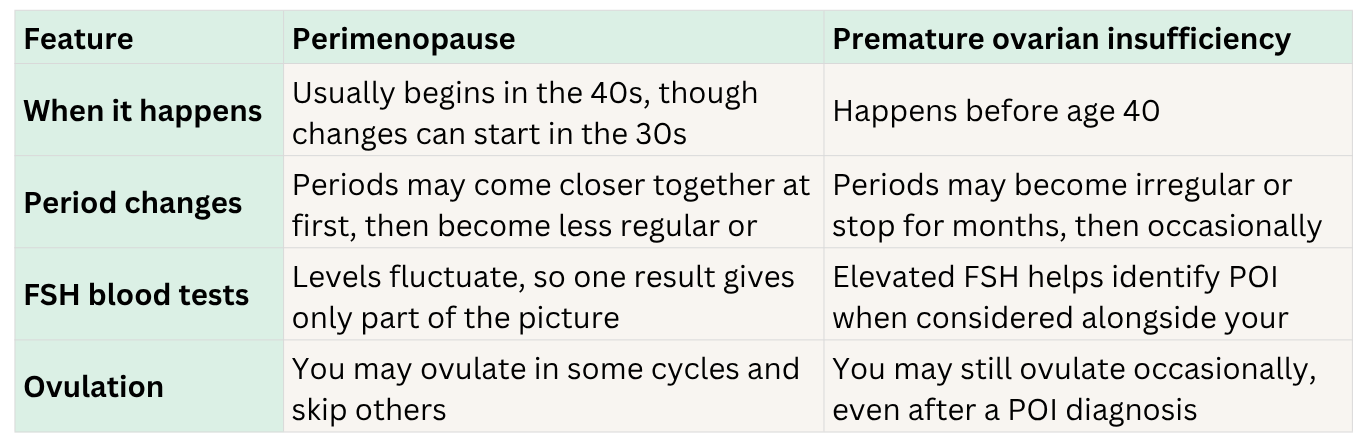
Reduced ovarian activity is another possibility, particularly with new hot flashes or vaginal dryness before 40.[11] General explanations for a missed period apply here too, but the contraceptive history helps narrow the investigation.
What should happen at the three-month checkpoint?
Schedule an appointment once you've gone three months without a period after stopping the pill. ASRM recommends investigation after more than three months without previously regular periods. Its threshold is six months when cycles were previously irregular, with earlier assessment based on symptoms and circumstances.[1,2]
Bring one short timeline: your method, last-use date, bleeding dates, pregnancy tests, and what periods were like before contraception. Include new symptoms and medication changes.
The evaluation often begins with pregnancy testing and blood tests such as TSH, prolactin, FSH, and estradiol. A pelvic ultrasound may help assess the ovaries and uterine lining.[2]
Treatment depends on the cause. Addressing an energy deficit differs from treating thyroid disease or managing PCOS. A clinician may prescribe a progestin course to assess withdrawal bleeding after excluding pregnancy.[2,7]
Seek urgent care for severe pelvic pain, fainting, or shoulder pain when pregnancy is possible. These symptoms can occur with an ectopic pregnancy.[12]
For a period that is only several days late, our guide to how late a period can be covers that shorter timeline.
Can Oova help you see whether ovulation is returning?
If you're trying to conceive, the useful question is often whether an ovulation pattern is appearing before bleeding returns. Oova measures urinary LH and the estrogen and progesterone metabolites E3G and PdG.[13]
An LH rise can signal approaching ovulation. A sustained PdG rise afterward provides evidence that ovulation occurred. Tracking the sequence gives more information than waiting for a period alone.[8,13]
Oova's support guidance recommends starting about two to three months after stopping hormonal contraception, including hormonal IUD removal.[14,15] This is testing guidance. Fertility can return earlier, so it is not an instruction to delay trying to conceive.[1,3]
Trying to conceive after birth control?
Oova tracks LH and PdG so you can follow signs of returning ovulation, even before your first period. Share the results with your clinician while your absent periods are being evaluated.[13]
Explore the Oova Fertility Kit
Frequently asked questions
Does no period mean birth control damaged my fertility?
Periods can remain absent because ovulation is delayed, medication effects persist, or another cycle condition is present. The evaluation identifies which explanation fits.[1,2,4]
Can I get pregnant before my first period?
Yes. Ovulation happens before the period that would follow it. Use another contraceptive method if you want to prevent pregnancy.[1,3]
Should I wait a year for fertility testing?
Absent or very irregular cycles are reasons to seek assessment earlier. The usual waiting period for an infertility evaluation assumes no known concern requiring earlier investigation.[16]
Is there a supplement that restarts periods?
The right treatment depends on the cause. Check supplements with your healthcare team before using them to address absent periods, especially when pregnancy is possible.
Where can I read about trying for pregnancy after contraception?
For broader timelines, see how long pregnancy can take after birth control. For preparation, see trying to conceive after birth control.
For returning ovulation signs once you are tracking, read signs of ovulation after stopping the pill.
About the author
Sources
1. Mayo Clinic. Birth control pill FAQ: Benefits, risks and choices. Patient information.
2. ASRM. Current evaluation of amenorrhea: a committee opinion. 2024. Clinical guidance.
3. ACOG. Long-Acting Reversible Contraception: Intrauterine Device and Implant. Patient FAQ.
4. CDC. Injectables: U.S. Selected Practice Recommendations for Contraceptive Use. 2024. DMPA guidance.
5. ASRM ReproductiveFacts. Noncontraceptive Benefits of Birth Control Pills. Revised 2023. Patient fact sheet.
6. Baylor College of Medicine Department of Obstetrics and Gynecology. Birth Control Guide. 2025, pill section. Patient guide.
7. Endocrine Society. Functional Hypothalamic Amenorrhea. 2017. Clinical practice guideline.
8. U.S. Office on Women's Health. Your menstrual cycle. Cycle biology.
9. U.S. Office on Women's Health. Pregnancy tests. Testing guidance.
10. NICHD. What causes amenorrhea? Causes.
11. NICHD. Primary Ovarian Insufficiency. Overview.
12. ACOG. Ectopic Pregnancy. Patient FAQ.
13. Oova. Fertility Hormone Tracking Kit. Product information.
14. Oova Support. Can I use Oova while on birth control? Updated November 21, 2025. Testing guidance.
15. Oova Support. Can I use Oova while I have an IUD? Updated November 21, 2025. IUD guidance.
16. ASRM. Fertility evaluation of infertile women: a committee opinion. 2026. Clinical guidance.
About the Oova Blog:
Our content is developed with a commitment to high editorial standards and reliability. We prioritize referencing reputable sources and sharing where our insights come from. The Oova Blog is intended for informational purposes only and is never a substitute for professional medical advice. Always consult a healthcare provider before making any health decisions.
