
Hot flashes just before menstruation can be unsettling, especially when periods are still regular. Learn why the timing happens, when it may suggest perimenopause, and what to track.

Hot flashes just before menstruation can be unsettling, especially when periods are still regular. Learn why the timing happens, when it may suggest perimenopause, and what to track.
Hot flashes before your period can occur during perimenopause, but the timing alone does not diagnose it. Hormone levels change across a menstrual cycle, and some women notice more warmth, flushing or night sweats in the days before bleeding starts. Hot flashes are also influenced by age, medications and other medical conditions. [1, 2]
The important clue isn't just that you felt hot. It's whether these episodes are new, repeat before menstruation and come with other changes in your cycle, sleep or symptoms.
Why do I get hot flashes right before my period?
Estrogen and progesterone normally change during the menstrual cycle. After ovulation, progesterone increases, and both hormones typically fall before the next period if pregnancy does not occur.
Changes in estrogen signaling affect the brain's temperature-regulating system. That is one reason hot flashes are common around the menopause transition. However, a hot flash before menstruation cannot be reliably traced to a particular estrogen reading or a single hormone drop. [2, 3]
Some people first notice this pattern in their late 30s or 40s; others experience it at different ages, and some never experience it. If the symptoms are new or disruptive, it's worth discussing them rather than assuming they're routine PMS.
What is the difference between a hot flash and feeling warm before your period?
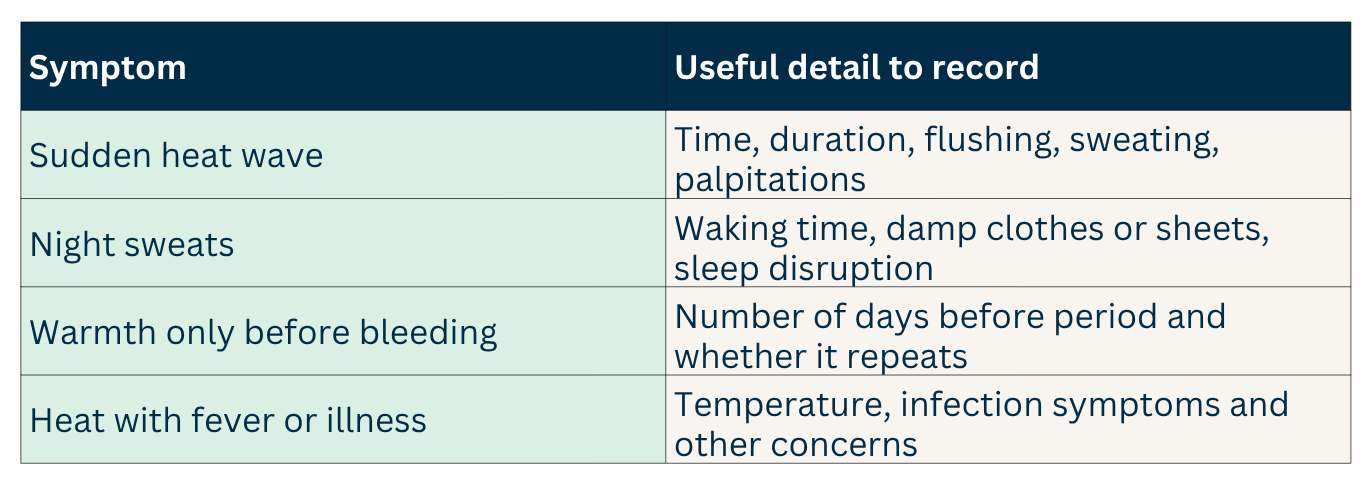
A hot flash is usually a sudden wave of heat, commonly in the face, neck or chest. You may notice flushing, sweating, a pounding heartbeat or chills afterward. It often lasts a few minutes. Night sweats are similar episodes that happen during sleep and can wake you up. [2]
Feeling warmer than usual, sweating in a hot bedroom or becoming overheated during exercise isn't necessarily the same thing. The intensity, timing and accompanying symptoms help your clinician distinguish the possibilities.
Can you have perimenopausal hot flashes while periods are still regular?
Yes. Menopause symptoms can begin before periods stop, and some people experience vasomotor symptoms while they are still cycling. A regular menstrual schedule does not rule out early reproductive aging or another cause of symptoms. [1, 3]
NICE NG23 recommends identifying perimenopause clinically in otherwise healthy people aged 45 or older when new vasomotor symptoms occur with irregular periods. Regular periods do not meet that specific NICE pathway, so clinicians assess the age, symptoms, medication use and other possible causes individually. At ages 40 to 45, and especially below 40, further evaluation may be appropriate. [1]
For more about symptoms that precede irregular cycles, read can you be in perimenopause with regular periods?.
Is it PMS, perimenopause, or something else?
PMS usually refers to a recurring group of emotional or physical symptoms before menstruation that improve after bleeding starts. A sudden hot flash is not, on its own, enough to identify PMS or perimenopause. If irritability, anxiety or low mood cluster with the heat episodes, our comparison of PMDD and perimenopause can help you organize the symptoms to discuss with a clinician.
Other possible explanations for sweating or heat episodes can include thyroid dysfunction, medication effects, infection, anxiety episodes, low blood sugar or environmental factors. A clinician can decide whether evaluation is needed based on the full history and examination.
Talk to a healthcare professional if symptoms are persistent, are getting worse, or interrupt sleep or daily life. Seek prompt evaluation if sweating occurs with unexplained fever, significant unexplained weight loss, chest pain, fainting or other concerning symptoms.
Why do hot flashes sometimes happen only a few days a month?
Pay attention to the distance between an episode and the next period, not only the cycle-day number. For example, a hot flash on Day 25 in a 28-day cycle occurs three days before bleeding. If the next cycle lasts 25 days, the same three-day premenstrual pattern would appear around Day 22. That is more informative than looking for symptoms on the same numbered day each month.
Some people have episodes only a few days before bleeding; others find the window grows wider or shifts as cycles become less predictable. Our guide to perimenopause hormone patterns explains why a single calendar date may miss the broader cycle picture.
What should you track if hot flashes happen before your period?
Try a short log for two or three cycles. Mark the first day of menstrual bleeding, the date and time of each heat episode, night waking, sleep disruption, medication changes and potential triggers such as alcohol, illness or a warm room. Count backward from the start of the next period to see whether the episodes consistently occur two, three or five days beforehand.
Cycle A: a 28-day cycle with night sweats on Days 25 and 26, two to three days before bleeding. Cycle B: a 25-day cycle with night sweats on Days 22 and 23, again two to three days before bleeding. Cycle C: a 32-day cycle with symptoms on Days 28 to 30, now two to four days before bleeding. Those episodes fall on different calendar days but form a similar premenstrual cluster. This example is illustrative, not a diagnostic hormone signature.
In your log, look for three distinct possibilities: symptoms consistently limited to the days before bleeding, episodes appearing throughout the cycle, or a changing cluster that expands as cycle lengths vary. Each can point your clinician toward different follow-up questions, but none proves a specific hormonal cause.
If you're already tracking hormones, noting your symptoms alongside estrogen, LH and progesterone patterns may help you observe whether a pattern repeats. These measurements do not prove the cause of a hot flash and cannot diagnose perimenopause on their own.
If your cycles are becoming shorter, the flash cluster may move to an earlier numbered cycle day even when it still occurs just before bleeding. If your periods become irregular, count backward from the next period rather than assuming symptoms always happen around Day 26. You can use your records to ask whether the pattern is changing across months.
How do you treat hot flashes before your period?
If heat episodes are frequent, disruptive or new, ask a clinician about causes and treatment. Treatment can include hormone therapy for eligible patients or evidence-based nonhormonal options, depending on medical history and contraception needs. For a complete discussion, see our main guide to perimenopause hot flashes. [1, 4]
Questions to bring to your doctor
- Do these episodes sound like vasomotor symptoms or could they have another cause?
- Does my age and pattern of periods change how we assess perimenopause?
- Could medication, thyroid disease or another health issue be contributing?
- Which treatments make sense given my health history and contraception needs?
- Would a symptom and cycle diary help us assess whether treatment is improving sleep and daytime functioning?
Frequently asked questions
Are hot flashes a sign that my period is coming?
For some people, hot flashes recur in the days before menstruation. But they are not a reliable way to predict the exact date your period will start, and they don't establish that perimenopause has begun.
Can estrogen drop before your period cause hot flashes?
Estrogen signaling is involved in temperature regulation, and hormone levels normally change before menstruation. It is plausible that those changes contribute to symptoms in some women, but one low reading cannot establish the cause of an individual episode. [2, 3]
Why do I get night sweats before my period but not the rest of the month?
Symptoms may cluster in a recurring part of the cycle. Keep a record of the timing, severity and sleep disruption, then discuss new or troublesome symptoms with your clinician. Other causes of nighttime sweating may also need consideration.
Can you have hot flashes at 38 and still have regular periods?
Yes, but do not assume the explanation is perimenopause. New vasomotor symptoms in your late 30s deserve evaluation, especially if there are menstrual changes, fertility concerns or other symptoms. [1]
Do I need an estrogen or FSH blood test to confirm perimenopause?
Not necessarily. In otherwise healthy people aged 45 or older with typical symptoms, guidelines generally recommend identifying perimenopause clinically rather than using routine hormone tests. Assessment can differ at ages 40 to 45 or when premature ovarian insufficiency is a concern. [1]
Can Oova tell me why I have hot flashes?
Oova can help you record estrogen, LH and progesterone patterns alongside symptoms. It cannot determine that a particular hormone value caused a hot flash or diagnose the menopause transition from one measurement.
The bottom line
Hot flashes before your period may be connected to the menstrual cycle, and they can be part of perimenopause. But timing is a clue, not a diagnosis. If symptoms are new, disruptive or accompanied by other changes, talk with a healthcare professional.
If you'd like to see your reproductive hormone patterns alongside the days you feel your symptoms, explore Oova's Perimenopause Kit as one part of that broader picture.
About the author
Sources
- NICE. Menopause: Identification and Management. Guideline NG23, recommendations (updated).
- The Menopause Society. Hot Flashes. Patient Education.
- The Menopause Society. Perimenopause. Patient Education.
- The Menopause Society. The 2023 Nonhormone Therapy Position Statement. Menopause. 2023.
About the Oova Blog:
Our content is developed with a commitment to high editorial standards and reliability. We prioritize referencing reputable sources and sharing where our insights come from. The Oova Blog is intended for informational purposes only and is never a substitute for professional medical advice. Always consult a healthcare provider before making any health decisions.


