< Back to the Blog
Cycles

What Is a Normal Menstrual Cycle Length?

Kylie Han
Kylie Han

While menstrual cycle length and symptoms can look different for everyone, what happens in your body during a healthy menstrual cycle should be consistent. Here’s why it’s important to track your menstrual cycle length and what irregularities to look out for.

No items found.
Modified On:
Published:
Nov 1, 2024
Est. Read Time:
0
small palm tree against pink background
Published:
May 11, 2025
Est. Read Time:
0

While menstrual cycle length and symptoms can look different for everyone, what happens in your body during a healthy menstrual cycle should be consistent. Here’s why it’s important to track your menstrual cycle length and what irregularities to look out for.

Cycle
Share to:

While menstrual cycle length and symptoms can look different for everyone, what happens in your body during a healthy menstrual cycle should be consistent. Here’s why it’s important to track your menstrual cycle length and what irregularities to look out for.

The menstrual cycle is a series of changes that occur in your body as it prepares for the possibility of pregnancy each month. This cycle starts on the first day of your period and ends the day before your next period begins. 

Average menstrual bleeding can happen anywhere in a “normal” menstrual cycle length, which is typically 21 to 35 days. However, menstrual cycles are difficult to predict as they can vary from cycle to cycle and are different for everyone. You may experience light or heavy flow, long or short periods, painful symptoms or no symptoms at all, and that might be the cycle that's “normal” for you. 

The “normal” menstrual cycle length, along with its symptoms, varies for everyone and will change throughout your life until you reach menopause (when you stop ovulating). It’s important to understand your individual cycle to monitor and maintain your health and well-being. 

Understanding a “normal” menstrual cycle length

To understand a “normal” menstrual cycle length, it’s important to understand the different parts of your cycle and how long they may last.

There are four phases of the menstrual cycle–menstruation, follicular, ovulation, and luteal. 

  • Menstruation: The menstrual cycle begins on the first day of your period when your uterine lining sheds out through your vagina if pregnancy hasn’t occurred. Average menstrual bleeding can happen every 21 to 35 days and can last on average from two to seven days.
  • Follicular phase: This is the first phase of the menstrual cycle that starts when your period begins and ends at ovulation (it overlaps with the menstruation phase). Estrogen levels increase and the follicle-stimulating hormone prompts the follicles in your ovaries to grow to form a fully mature egg. This part of the cycle tends to last anywhere from 10 to 16 days.
  • Ovulation: This phase occurs around day 14 of a 28-day menstrual cycle. Hormones cause the ovary to release an egg. Ovulation only lasts around 12-24 hours.
  • Luteal phase: This is the second half of your cycle after ovulation. Progesterone levels increase to thicken the uterine lining and prepare for possible pregnancy. If the egg isn’t fertilized during ovulation, hormone levels drop, the thick uterine lining sheds, and you get your menstrual period. The luteal phase tends to last between 10-16 days.

Overall, a normal menstrual cycle length is typically around 28 days, but anywhere from 21 to 35 days is still considered “normal.”

Yet the length of menstrual cycles can range for everyone. Longer cycles are typical in the first few years after menstruation begins, and then might shorten and become more consistent as people age. Your menstrual cycle might be the same length every month or more irregular. 

Furthermore, certain kinds of birth control such as birth control pills or intrauterine devices (IUD) can regulate a menstrual cycle to be more consistent and ease your symptoms or to not occur at all. 

By tracking your menstrual cycle, you can find what’s “normal” for you. If you notice any major anomalies in your menstrual cycle, it’s important to consult a healthcare professional. 

Factors that affect a normal menstrual cycle length 

If your menstrual cycle length is outside of what’s considered a “normal” menstrual cycle length, what are potential underlying factors?

Hormones

Hormones play a crucial role in directing each phase of the menstrual cycle. The rise and fall of certain hormones cause the uterine lining to thicken and the ovaries to release an egg during ovulation. Therefore, hormonal imbalances can affect the length and regularity of your menstrual cycle. 

Hormone imbalances can stem from pregnancy and breastfeeding to more serious health issues such as eating disorders and dramatic weight loss, polycystic ovary syndrome (PCOS), premature ovarian failure, pelvic inflammatory disease, and uterine fibroids. 

Typically, the average menstrual cycle is around 28 days, with a luteal phase (the time between ovulation and the start of menstruation) lasting between 12 to 14 days. However, hormone imbalances can cause this phase to shorten or extend, both of which affect the menstrual cycle: 

  • Short luteal phase: A short luteal phase lasts less than 10 days, so you get your period within 10 days of ovulation. Ten days is too short to let your uterine lining grow enough to support an embryo. This may be a sign of luteal phase defect—when your uterine lining doesn’t thicken enough to support a pregnancy. People with a short luteal phase may have more problems trying to conceive. 
  • Long luteal phase: Long luteal phases come 18 days or later after ovulation. People with a long luteal phase may have PCOS or other hormone imbalance issues. If you don’t get your period within 14 days of ovulation, it can also be a sign of early pregnancy. Take a pregnancy test to confirm. 

Age

Menstrual cycles will also change as you age. During perimenopause, when your body is transitioning to menopause, you begin to experience periods that are less frequent or regular. 

>>MORE: Perimenopause vs. Menopause: What’s the Difference?

Other Factors

Additional influences, such as high stress levels, overexercising, or rapid weight changes, can also disrupt cycle regularity. Stress-related changes, in particular, affect hormone levels, potentially causing fluctuations in cycle length and frequency.

How to find your menstrual cycle length 

As menstrual cycles are unique to you, it can be helpful to track your menstrual cycle to identify any irregularities and monitor your hormonal health. Tracking your menstrual cycle is also useful if you’re trying to get pregnant so that you can determine when you’re ovulating and most fertile. 

To find your menstrual cycle length, use a calendar and mark the first day of your period. Mark each day you’re bleeding and stop once you’re no longer bleeding. When the bleeding starts again, mark the calendar again. As you continue to do this over months, you can count the number of days between your periods to calculate the length of your cycle and how long your menstrual bleeding lasts. 

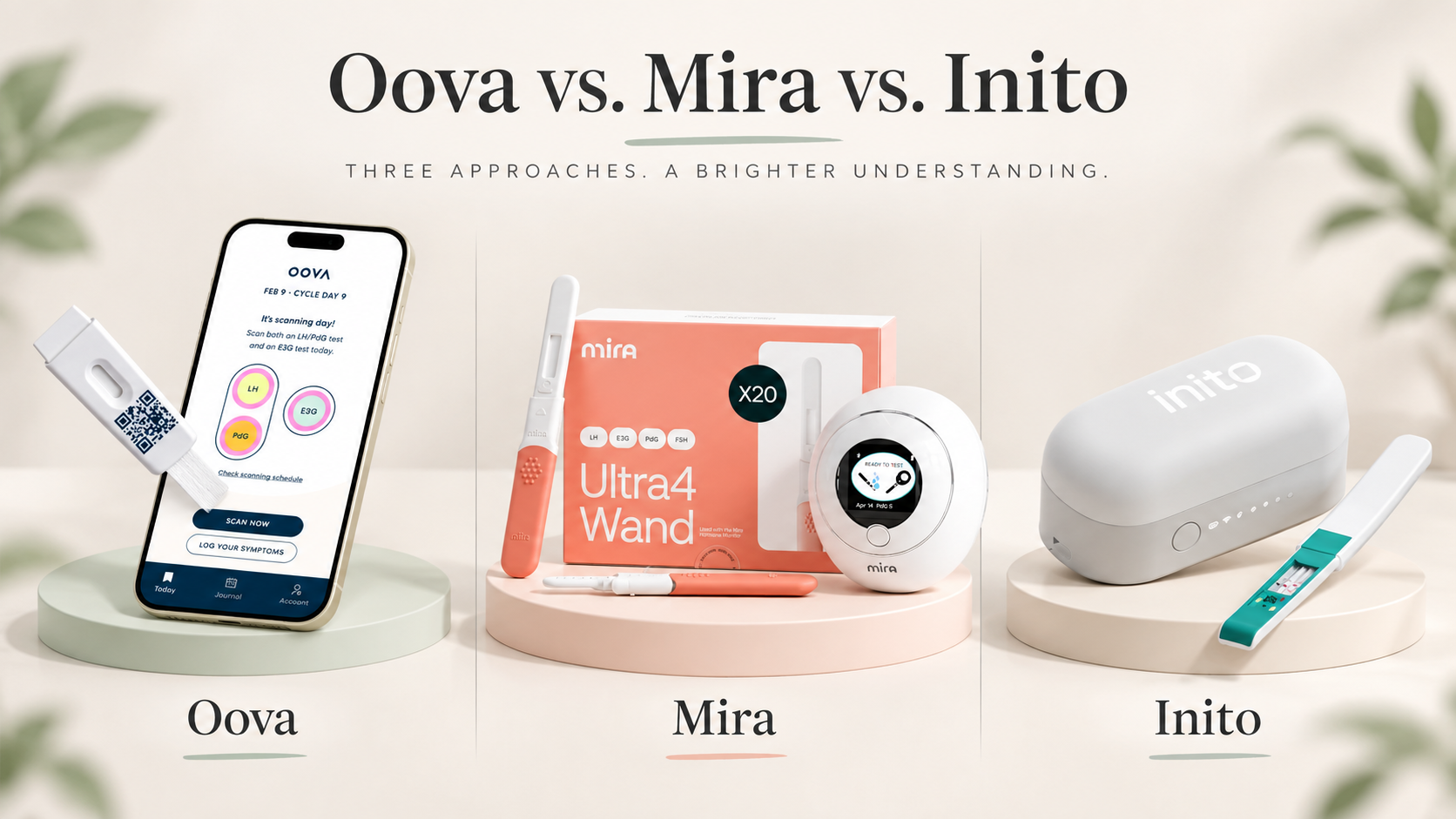
There are also mobile apps, fertility trackers, and hormone tests like Oova that are also helpful methods for monitoring and understanding your menstrual cycle. 

Oova’s at-home hormone tests are a convenient and effective way to track your specific hormone levels and understand your unique menstrual cycle and its phases from the comfort of your home. Oova can be used to track and predict ovulation whether you are trying to conceive, navigating perimenopause, experiencing a reproductive health condition like PCOS, and more. 

Irregular menstrual cycle length

Irregular menstruation is anything that’s not a normal menstrual period. This can include several signs and symptoms that may suggest underlying health concerns or changes in hormone balance. 

Two main irregularities in menstrual cycle length include:

  • Periods stop for more than 90 days: Missing your period for over 90 days without a known cause, such as pregnancy or menopause, could indicate hormonal imbalances, stress, weight changes, or underlying health conditions that require attention.
  • Cycles shorter than 21 days or longer than 35 days: A cycle shorter than 21 days or longer than 35 days is outside the standard range and may indicate hormone-related conditions, such as PCOS or thyroid issues, affecting cycle regularity.

There are also non-time-based symptoms of irregular menstrual cycles, including:

  • Bleeding or spotting in between periods
  • Bleeding that's much heavier or lighter than usual
  • You develop severe pain during your period
  • Suddenly you get a fever or feel sick after using tampons

>>MORE: All About Irregular Cycles

If you experience these signs of irregular menstruation, it’s important to seek out a healthcare professional for help. Early intervention can often address underlying issues before they become more serious, helping to restore cycle regularity and overall health.

Normal menstrual cycle length: the bottom line

As periods are different for everyone, so is the definition of what a “normal” menstrual cycle looks like. A “normal” menstrual cycle length is anywhere between 21 to 35 days. Your length may change from one cycle to the next, and may naturally change over time as you age and reach perimenopause.

By tracking your cycle, you’ll be able to identify any irregularities and if you notice any extreme changes, it’s important to consult your doctor. Menstrual cycles are key not only for reproductive health, but for overall well-being—your hormone balance is essential for bone, thyroid, and metabolic health. By monitoring your cycle length and symptoms, you can better understand what’s normal for you and take action.

About the author

Kylie Han
Kylie Han is a writer from Oakland, California. She's the SEO Manager at The Infatuation, where she loves to support the work of writers and highlight local restaurants. She is also a contributing writer at The Infatuation and is excited to get involved in reproductive health, a passion of hers.

Sources

perimenopause-periods
Should I still see my gynecologist if my periods are just "weird" but not painful?
Yes. Annual visits remain important during perimenopause. Your provider can help determine if your "weird" periods are typical perimenopause changes or something requiring attention. They can also discuss management options to improve your quality of life.
perimenopause-periods
How long do irregular periods last before menopause?
Irregular perimenopause periods typically last 4 to 8 years before your final period, though this varies greatly. Some women experience irregularity for just a few months, while others have irregular periods for over a decade before reaching menopause.
perimenopause-periods
Is it normal to have two periods in one month during perimenopause?
Yes, this can happen, especially in early perimenopause when cycles shorten. You might have a 21 day cycle, meaning you could have a period at the beginning and end of the same calendar month. Track these patterns to distinguish between short cycles and abnormal bleeding.
perimenopause-periods
Why are my periods suddenly so heavy in my 40s?
Heavy perimenopause periods often result from estrogen dominance. When progesterone drops but estrogen remains high, your uterine lining builds up more than usual, causing heavier bleeding when it sheds. This is common in perimenopause but should be evaluated if it affects your daily life.
perimenopause-periods
Can I still get pregnant if my periods are irregular during perimenopause?
Yes. As long as you're having periods, even irregular ones, you may still be ovulating. Pregnancy is possible until you've gone 12 full months without any period. If you don't want to become pregnant, continue using contraception throughout perimenopause.
perimenopause-and-weight-gain
Can you prevent perimenopause weight gain completely?
While you may not prevent all weight changes during perimenopause, you can minimize gain through proactive strategies. Starting strength training before perimenopause, maintaining consistent sleep habits, and managing stress can help your body adapt to hormonal changes more smoothly. Remember, some body changes during this transition are normal and healthy.
perimenopause-and-weight-gain
At what age does perimenopause weight gain typically start?
Perimenopause weight gain can begin in your late 30s or early 40s, often coinciding with the first hormonal changes. Many women notice gradual changes starting 5 to 10 years before their final period. The timing varies greatly based on genetics, lifestyle, and overall health.
perimenopause-and-weight-gain
Does everyone gain the same amount during perimenopause?
No. Perimenopause weight gain varies significantly. Some women gain 5 pounds, others 20 or more, and some maintain their weight. Factors include genetics, starting weight, activity level, stress, sleep quality, and how dramatically hormones fluctuate. Your experience is unique to your body.
Is perimenopause weight gain different from regular aging weight gain?
Yes. While metabolism naturally slows with age, perimenopause weight gain has distinct characteristics. The hormonal shifts cause fat redistribution to the midsection, even if overall weight doesn't change dramatically. This abdominal weight gain pattern is specifically linked to declining estrogen and progesterone, not just aging.
perimenopause-and-weight-gain
Will the weight come off after menopause?
Perimenopause weight gain often stabilizes after menopause when hormones level out, but the weight doesn't automatically disappear. The metabolic and body composition changes that occur during perimenopause tend to persist. However, with consistent healthy habits, weight management becomes more predictable post menopause than during the fluctuating perimenopause years.
https://www.oova.life/blog/progesterone-supplementation-guide
Can I take progesterone if I'm breastfeeding?
Yes, progesterone is generally safe while breastfeeding and doesn't significantly affect milk supply. However, always discuss with your healthcare provider before starting any hormone supplementation while nursing.
https://www.oova.life/blog/progesterone-supplementation-guide
Is it safe to take progesterone throughout pregnancy?
Yes, when prescribed by your healthcare provider. Progesterone supplementation in early pregnancy is safe and can reduce miscarriage risk in women with low progesterone or a history of pregnancy loss. Most providers continue supplementation through the first trimester (weeks 10-12) when the placenta takes over.
https://www.oova.life/blog/progesterone-supplementation-guide
Can progesterone supplementation cause weight gain?
Progesterone can cause temporary water retention and bloating, which may show up as a few pounds on the scale, but it doesn't cause true fat weight gain. Most women don't experience significant weight changes from progesterone supplementation.
https://www.oova.life/blog/progesterone-supplementation-guide
Can I switch from pills to suppositories or vice versa?
Yes, but only under your doctor's guidance. The dosing and timing may need adjustment when switching between forms since they're absorbed differently. Never switch on your own, especially if you're pregnant or undergoing fertility treatment.
https://www.oova.life/blog/progesterone-supplementation-guide
Will progesterone supplementation delay my period?
Yes, progesterone keeps the uterine lining intact, so if you're not pregnant and continue taking progesterone, your period will be delayed. Once you stop taking it, your period should start within 2-10 days. If you are pregnant, progesterone helps maintain the pregnancy and you won't get a period.
https://www.oova.life/blog/progesterone-supplementation-guide
Should I take progesterone pills orally or vaginally?
For fertility and pregnancy support, vaginal progesterone is usually preferred because it delivers higher concentrations directly to the uterus. For perimenopause or general hormone balance, oral progesterone often works well and is more convenient. Your doctor will recommend the best route based on your specific needs.
https://www.oova.life/blog/progesterone-supplementation-guide
When should I start taking progesterone after ovulation?
Typically, progesterone supplementation for luteal phase support starts 2-3 days after ovulation (confirmed by LH surge or temperature rise). Your doctor will give you specific timing based on your protocol. Some women start immediately after a positive ovulation test.
https://www.oova.life/blog/progesterone-supplementation-guide
What's better: progesterone cream or pills?
Pills (oral micronized progesterone) are generally more effective and reliable than creams because absorption from creams is inconsistent. For medical conditions like fertility issues, low progesterone, or HRT, prescription pills or suppositories are strongly recommended over over-the-counter creams.
https://www.oova.life/blog/low-vs-high-progesterone-symptoms
How can I tell if I have low or high progesterone?
The only definitive way to know is through hormone testing via blood tests or at-home urine tests that measure progesterone metabolites. However, symptom patterns can provide clues: anxiety and irregular periods suggest low progesterone, while bloating and extreme fatigue suggest high progesterone.
https://www.oova.life/blog/low-vs-high-progesterone-symptoms
When during my cycle should I test progesterone levels?
Test progesterone levels during the luteal phase, typically 7 days after ovulation or around day 21 of a 28-day cycle. This is when progesterone should be at its peak, making it easier to identify if levels are too low or too high.
https://www.oova.life/blog/low-vs-high-progesterone-symptoms
What are the main differences between low and high progesterone symptoms?
Low progesterone typically causes irregular or heavy periods, anxiety, hot flashes, and sleep issues. High progesterone causes bloating, fatigue, intense breast tenderness, and depression-like mood changes. Low progesterone symptoms persist throughout your cycle, while high progesterone symptoms are most intense during the luteal phase.
https://www.oova.life/blog/low-vs-high-progesterone-symptoms
Can you have symptoms of both low and high progesterone?
Some symptoms like breast tenderness and mood changes can occur with both low and high progesterone, making it confusing. However, the timing, intensity, and accompanying symptoms differ. Hormone testing is the best way to determine which imbalance you're experiencing.
https://www.oova.life/blog/10-dpo
Can stress affect 10 DPO symptoms?
Yes, stress can worsen or mimic 10 DPO symptoms. Stress increases cortisol, which can cause cramping, fatigue, and mood changes similar to both PMS and early pregnancy. During the two-week wait, try stress-reduction techniques like gentle exercise, meditation, or spending time with loved ones.
https://www.oova.life/blog/10-dpo
Is it better to test at 10 DPO or wait?
It's better to wait until 12–14 DPO for more accurate results. Testing at 10 DPO often leads to false negatives because hCG levels may still be too low. If you absolutely can't wait, use a sensitive early detection test with first morning urine, and be prepared to retest in 2–3 days if negative.
https://www.oova.life/blog/10-dpo
What does implantation bleeding look like at 10 DPO?
Implantation bleeding at 10 DPO is typically light pink or brown, much lighter than a period, and lasts 1–2 days. It's often just spotting when you wipe or a few drops on a panty liner. However, only 15–20% of pregnant women experience implantation bleeding—most don't have any bleeding at all.
https://www.oova.life/blog/10-dpo
Why am I cramping at 10 DPO?
Cramping at 10 DPO can be caused by elevated progesterone (whether you're pregnant or not), implantation (if you're pregnant), or premenstrual cramping. Unfortunately, cramping alone can't tell you if you're pregnant since progesterone causes similar symptoms in both scenarios.
https://www.oova.life/blog/10-dpo
What are the chances of a BFP at 10 DPO?
If you're pregnant, you have about a 50–60% chance of getting a positive test at 10 DPO. This means there's a 40–50% chance of a false negative even if you conceived. Chances improve significantly by 12–14 DPO.
https://www.oova.life/blog/10-dpo
What DPO is most accurate for pregnancy testing?
14 DPO (the day of your missed period) is the most accurate time to test, with 99% accuracy. 12 DPO offers 80–90% accuracy. 10 DPO has only 50–60% accuracy. For best results, wait as long as you can—ideally until 12–14 DPO.
https://www.oova.life/blog/10-dpo
Is 10 DPO too early to test?
10 DPO is considered early for pregnancy testing. While some women get positives at 10 DPO, accuracy is only 50–60% if you're pregnant. For best results, wait until 12 DPO (80–90% accuracy) or 14 DPO/missed period (99% accuracy).
https://www.oova.life/blog/10-dpo
Can you have implantation at 10 DPO?
Yes, implantation can still occur at 10 DPO, though 84% of women have already implanted by this point. Late implantation at 10–12 DPO is normal. If implantation happens at 10 DPO, you won't get a positive pregnancy test for another 2–3 days.
https://www.oova.life/blog/10-dpo
What does a negative test at 10 DPO mean?
A negative test at 10 DPO does not mean you're not pregnant. It's very common to get negatives at 10 DPO even if you conceived. Your hCG levels may still be too low, or implantation may have occurred later. Wait until 12–14 DPO to retest for more accurate results.
https://www.oova.life/blog/10-dpo
Can you get a positive pregnancy test at 10 DPO?
Yes, but only about 50–60% of pregnant women will get a positive at 10 DPO. The other 40–50% have hCG levels that are still too low to detect. If you test negative at 10 DPO, wait 2–3 days and test again.
https://www.oova.life/blog/high-progesterone-symptoms
Can high progesterone cause weight gain?
Yes, elevated progesterone can cause temporary weight gain through water retention and bloating. This is a normal part of the luteal phase and early pregnancy.
https://www.oova.life/blog/how-to-increase-estrogen
Does stress affect estrogen levels?
Yes, chronic stress elevates cortisol, which can suppress estrogen production and disrupt hormonal balance. Stress reduction through meditation, yoga, adequate sleep, and self-care practices helps maintain optimal estrogen levels.
https://www.oova.life/blog/how-to-increase-estrogen
When should I consider medical treatment for low estrogen?
Consider medical intervention if natural methods don't improve symptoms after 3 months, if symptoms severely impact quality of life, if you're experiencing early menopause (before 40), or if you have fertility concerns. Hormone replacement therapy may be appropriate in these cases.
https://www.oova.life/blog/how-to-increase-estrogen
What are the signs that my estrogen is increasing?
Signs of rising estrogen include more regular menstrual cycles, reduced hot flashes, improved vaginal lubrication, better mood stability, increased energy, and improved skin elasticity. You may also notice reduced symptoms that originally indicated low estrogen.
https://www.oova.life/blog/how-to-increase-estrogen
Can exercise increase estrogen levels?
Yes, moderate exercise stimulates estrogen release and helps maintain hormonal balance. Aim for 150 minutes of moderate cardio weekly plus strength training twice per week. However, excessive exercise can actually lower estrogen, so balance is key.
https://www.oova.life/blog/how-to-increase-estrogen
How long does it take to increase estrogen naturally?
With consistent dietary and lifestyle changes, you may notice improvements in symptoms within 4-8 weeks. However, significant hormonal changes typically take 2-3 months. Tracking your cycle and symptoms can help you monitor progress.
https://www.oova.life/blog/how-to-increase-estrogen
What foods increase estrogen levels naturally?
Foods high in phytoestrogens can help increase estrogen naturally. The best options include flax seeds (high in lignans), soy products (tofu, tempeh, edamame), lentils, chickpeas, whole grains (oats, quinoa, brown rice), and garlic. These plant compounds mimic estrogen's effects in the body.
https://www.oova.life/blog/perimenopause
What helps relieve hot flashes quickly?
Cool environments, layered clothing, herbal teas, and medical treatments like gabapentin or HRT may help—depending on severity. Lifestyle changes like reducing caffeine and alcohol can also provide relief.
https://www.oova.life/blog/perimenopause
Are there tests to confirm perimenopause?
Yes. Tests measuring estradiol, LH, and FSH levels can indicate hormonal shifts—but diagnosis is often symptom-based since hormone levels fluctuate widely during perimenopause.
https://www.oova.life/blog/perimenopause
How do I know it's perimenopause and not something else?
A doctor may recommend hormone testing (like LH, E3G, and PdG) and track symptom timing. Diagnosis is often based on symptoms combined with age and menstrual pattern changes.
https://www.oova.life/blog/perimenopause
What's the earliest age perimenopause can start?
Some women begin experiencing symptoms as early as their mid-30s, though perimenopause typically starts between ages 38-45.
https://www.oova.life/blog/perimenopause
Does perimenopause affect mental clarity?
Yes. Brain fog and difficulty concentrating are common during hormone fluctuations in perimenopause.
https://www.oova.life/blog/TBD-10-symptoms-and-how-to-get-relief
What happens after the last sign of perimenopause?
After your final period, you enter postmenopause. You'll need 12 consecutive months without a period to confirm menopause. Many symptoms gradually improve, though some like vaginal dryness may persist without treatment.
https://www.oova.life/blog/TBD-10-symptoms-and-how-to-get-relief
When do perimenopause symptoms finally stop?
Some symptoms like brain fog improve after menopause, while others like hot flashes may continue for up to 10 years post-menopause. Vaginal symptoms often persist or worsen without treatment. Each person's timeline is different.
https://www.oova.life/blog/high-progesterone-symptoms
Is high progesterone a sign of pregnancy?
Yes, high progesterone is one of the earliest indicators of pregnancy. Progesterone levels rise significantly after conception to support the developing embryo and reach their peak during the third trimester.
https://www.oova.life/blog/TBD-10-symptoms-and-how-to-get-relief
Can you still get pregnant in late perimenopause?
Yes, you can still get pregnant during perimenopause as long as you're having periods, even if they're infrequent. Continue using birth control until you've gone 12 consecutive months without a period and have officially reached menopause.
https://www.oova.life/blog/TBD-10-symptoms-and-how-to-get-relief
Do symptoms get worse before perimenopause ends?
Yes, most perimenopause symptoms intensify in the final 1-2 years before menopause. Hot flashes peak around your final period, vaginal symptoms worsen, and mood changes increase. However, brain fog typically improves in late perimenopause.
https://www.oova.life/blog/TBD-10-symptoms-and-how-to-get-relief
How long does late perimenopause last?
Late perimenopause typically lasts 1-3 years before your final period. However, the exact duration varies significantly from person to person. You've reached menopause after 12 consecutive months without a period.
https://www.oova.life/blog/high-progesterone-symptoms
What are the symptoms of high progesterone?
High progesterone symptoms include fatigue, bloating, breast tenderness, weight gain, anxiety, depression, headaches, and food cravings. During pregnancy, you may also experience increased nipple sensitivity and muscle aches.
https://www.oova.life/blog/TBD-10-symptoms-and-how-to-get-relief
What are the first signs that perimenopause is ending?
The earliest signs include longer gaps between periods (60+ days), intensifying hot flashes that peak around your final period, and worsening vaginal dryness. These symptoms typically increase in late perimenopause before you reach official menopause.
https://www.oova.life/blog/high-progesterone-symptoms
When should I be concerned about high progesterone?
Consult a healthcare provider if you experience high progesterone symptoms outside your luteal phase when not pregnant, or if symptoms include severe pelvic pain, abnormal vaginal bleeding, or rapid weight gain while on hormone therapy.
https://www.oova.life/blog/high-progesterone-symptoms
How do you test progesterone levels?
Progesterone can be measured through blood tests at your doctor's office or at-home urine tests that measure PdG (a progesterone metabolite). Testing is typically done during the luteal phase, about 7 days after ovulation.

About the Oova Blog:
Our content is developed with a commitment to high editorial standards and reliability. We prioritize referencing reputable sources and sharing where our insights come from. The Oova Blog is intended for informational purposes only and is never a substitute for professional medical advice. Always consult a healthcare provider before making any health decisions.