A practical guide to what to track before a menopause or perimenopause appointment, including symptoms, cycle changes, treatment history, hormone patterns, and the questions that can help make the visit more useful
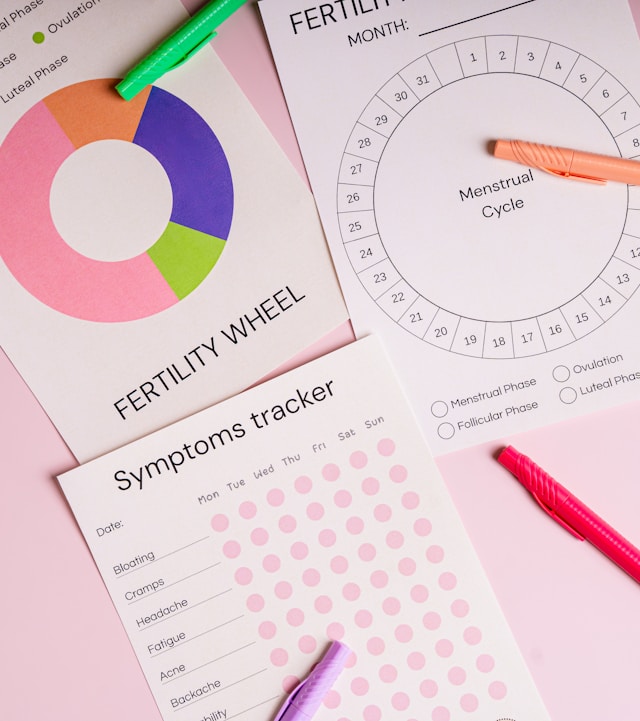
A practical guide to what to track before a menopause or perimenopause appointment, including symptoms, cycle changes, treatment history, hormone patterns, and the questions that can help make the visit more useful
If your menopause or perimenopause appointment tends to feel rushed, or you leave without saying half of what you meant to, you're not alone. Providers typically have limited time, and symptoms that feel constant and overwhelming day to day are easy to summarize as "I've been having a rough time" once you're actually in the room. Tracking a few specific things beforehand can turn a vague conversation into a more focused one.
Quick answer: Before your appointment, track your symptoms and their timing, any changes to your period or cycle, medications and supplements you're currently taking, any treatments you've already tried and how they went, and specific questions you want answered. If you have hormone data from an at-home tracker, bring that too.
What should I track before a menopause appointment?
Six categories cover most of what a provider will want to know:
- Symptoms and when they happen — not just which symptoms, but whether they're constant, cyclical, or tied to specific triggers like sleep, stress, or time of day
- Period and cycle changes — timing, flow, and any changes in regularity, even if your cycles have become unpredictable
- Current medications and supplements — including anything you've started or stopped recently, since timing can matter
- Treatments you've already tried — birth control, HRT, supplements, lifestyle changes, and how each one affected your symptoms, if at all
- Hormone or lab data, if you have it — from a previous blood test or an at-home hormone tracker
- Your specific questions — written down ahead of time, since it's easy to forget them once you're in the appointment
The goal isn't to arrive with a perfect data set. It's to replace "I've just felt off for a while" with something more specific a provider can act on. The full range of what these symptoms can include, from hot flashes to brain fog to joint pain, is broader than most people expect, the 34 symptoms of perimenopause covers the full picture.
How long should I track symptoms?
Even a few weeks of tracking can give you a clearer record than relying on memory alone. If you have a full cycle or several months of information, bring that too. Understanding how long to track hormones to see a real pattern can also help put individual readings in context.
Should I track my period if my cycles are irregular?
Yes, and irregularity itself is useful information to bring in. Track the date each period starts, roughly how long it lasts, and anything notable about flow, even if the pattern seems random. Cycle changes are often one of the earliest and most discussed signs of the menopause transition, so a written record of what's actually been happening, rather than a general sense that "things have been off," gives your provider more to work with. Perimenopause periods: changes to expect and how to track them walks through the specific shifts to watch for.
Don't assume every change is perimenopause.
If you're experiencing bleeding that is unusually heavy, prolonged, occurs between periods, or otherwise concerns you, mention it specifically rather than waiting for your routine menopause discussion. New or concerning symptoms can have causes unrelated to the menopause transition.
Should I bring hormone test results?
If you have them, yes. A single hormone test only reflects one moment, and hormone levels can shift meaningfully within days or even hours, so it's worth being clear with your provider about when a test was taken and what it can and can't tell them on its own. If you've been tracking hormone patterns over time with an at-home tool, that longitudinal view can give your provider additional context about how your hormone patterns and symptoms have changed over time. How to read your hormone results is a useful primer on interpreting what a result is and isn't telling you.
See your hormone patterns over time →
What medications and supplements should I document?
Write down everything you're currently taking, including over-the-counter supplements, and note when you started each one. If you've tried something and stopped, include that too, along with roughly how long you took it and whether you noticed any change. This matters because some supplements and medications can affect symptoms or interact with treatments your provider might otherwise consider, and "I think I tried magnesium for a while" is a lot less useful than "I took magnesium glycinate for about six weeks starting in March and didn't notice a change in my sleep."
What questions should I ask my menopause doctor?
A few starting points, depending on what you're trying to understand:
- Where do my symptoms and cycle changes fit within the stages of the menopause transition?
- Is there anything about my symptom pattern that suggests a specific hormonal cause, versus something else entirely?
- What would you want to see change, and by when, if we start a treatment?
- How will we know if a treatment is working, and what should I be tracking in the meantime?
- Are there symptoms I mentioned that warrant additional testing or a referral?
Providers may use frameworks such as STRAW+10 to help characterize the menopause transition, with changes in menstrual cycle patterns playing a central role and hormone markers sometimes providing additional context. Bringing a clear symptom and cycle history can help that conversation move faster. If your symptoms could point to something other than a hormonal cause, this piece on whether your symptoms are hormonal or something else is worth a read beforehand.
If you're already on a treatment
If you've started HRT, birth control, or another treatment and are trying to figure out whether it's working, bring specifics: when you started, any dose changes, and how your symptoms have shifted (or haven't) since. "It's been about the same" and "I feel better in the mornings but the hot flashes are still bad at night" tell your provider very different things. How to know whether a hormone treatment or lifestyle change is working and how to know if your HRT dose is right both go deeper on evaluating treatment response. Understanding why estrogen fluctuations can create good days and bad days can also help explain why symptoms feel unpredictable in perimenopause.
Bring these 6 things to your appointment
- A symptom log showing what happened, when, and how severe it was
- Your period and cycle history, including irregularity, even if it seems random
- A list of current medications and supplements, with start dates
- Any treatments you've already tried and how they went
- Hormone or lab data, if you have it, along with when it was taken
- Your specific questions, written down ahead of time
About the author
Sources
- American College of Obstetricians and Gynecologists. Menopause Symptom Tracker. https://www.acog.org/womens-health/health-tools/menopause-symptom-tracker
- American College of Obstetricians and Gynecologists. Perimenopausal Bleeding and Bleeding After Menopause. https://www.acog.org/womens-health/faqs/perimenopausal-bleeding-and-bleeding-after-menopause
- American College of Obstetricians and Gynecologists. The Menopause Years. https://www.acog.org/womens-health/faqs/the-menopause-years
- The Menopause Society. Perimenopause. https://menopause.org/patient-education/menopause-topics/perimenopause
- Harlow SD, Gass M, Hall JE, et al. Executive Summary of the Stages of Reproductive Aging Workshop +10: Addressing the Unfinished Agenda of Staging Reproductive Aging. https://pmc.ncbi.nlm.nih.gov/articles/PMC3340903/
- American College of Obstetricians and Gynecologists. Abnormal Uterine Bleeding. https://www.acog.org/womens-health/faqs/abnormal-uterine-bleeding
About the Oova Blog:
Our content is developed with a commitment to high editorial standards and reliability. We prioritize referencing reputable sources and sharing where our insights come from. The Oova Blog is intended for informational purposes only and is never a substitute for professional medical advice. Always consult a healthcare provider before making any health decisions.