Not every hormone symptom is urgent, and not every urgent symptom feels dramatic. This guide separates the small number of red flags that warrant a call today from the much larger set of patterns worth tracking and bringing to your next scheduled visit, and explains why the difference matters.

Not every hormone symptom is urgent, and not every urgent symptom feels dramatic. This guide separates the small number of red flags that warrant a call today from the much larger set of patterns worth tracking and bringing to your next scheduled visit, and explains why the difference matters.
Most hormone symptoms aren't emergencies, but a small number of signs do warrant a same-day call, and it's worth knowing the difference before you're in the moment trying to decide. This guide separates three tiers: symptoms that need a call today, symptoms worth a scheduled visit soon, and patterns that are genuinely more useful to track for a few cycles before you bring them to a provider at all.
Call today: symptoms that need medical attention now
These aren't common, but they're clear. If any of these apply to you, this is a call-today situation, not a wait-and-track one.
Bleeding that's soaking through protection every hour for several consecutive hours, or bleeding that lasts longer than seven to eight days. Clinical guidance from the American College of Obstetricians and Gynecologists defines this level of bleeding as abnormal uterine bleeding requiring evaluation, not something to monitor at home.
Any bleeding after menopause, meaning any bleeding at all, even spotting, once you've gone twelve full months without a period. This is one of the more universally agreed-upon red flags in gynecologic care and always warrants prompt evaluation.
Severe, one-sided pelvic pain, especially if it comes with dizziness, fainting, or shoulder pain, particularly if there's any chance of pregnancy. This combination can signal a medical emergency and needs same-day care, not a scheduled appointment.
Signs of significant blood loss, lightheadedness, a racing heart, or shortness of breath alongside heavy bleeding. This can indicate anemia severe enough to need prompt attention.
If none of these describe what you're experiencing, you're very likely in the next tier.
Schedule soon: patterns worth a visit, not an emergency
These don't need same-day care, but they're not something to sit on for months either. A visit within the next few weeks is reasonable.
Cycles consistently shorter than 21 days or longer than 35–38 days. Occasional variation is common, but a clear pattern outside that range over a couple of cycles is a legitimate reason to bring it to a provider. Irregular periods and their common causes is a useful starting reference if you're trying to understand what "irregular" actually covers before your visit.
A missed period with a negative pregnancy test, repeated more than once. There are many non-pregnancy reasons a period can go missing, but a repeated pattern is worth investigating rather than explaining away each month. Ten reasons for a missed period that aren't pregnancy walks through the more common explanations, though a repeated pattern still belongs in front of a provider.
Persistent intermenstrual or post-coital bleeding, spotting between periods or after sex that keeps happening rather than showing up once. ACOG guidance on abnormal uterine bleeding treats this kind of persistent pattern as one that merits a workup, separate from the isolated one-off spotting many women experience.
A consistently absent LH surge, if you're tracking ovulation and it's not appearing cycle after cycle. What no LH surge may mean for your fertility is worth reading before that conversation, since there are several possible explanations worth narrowing down first.
Track before your visit: patterns that benefit from data, not urgency
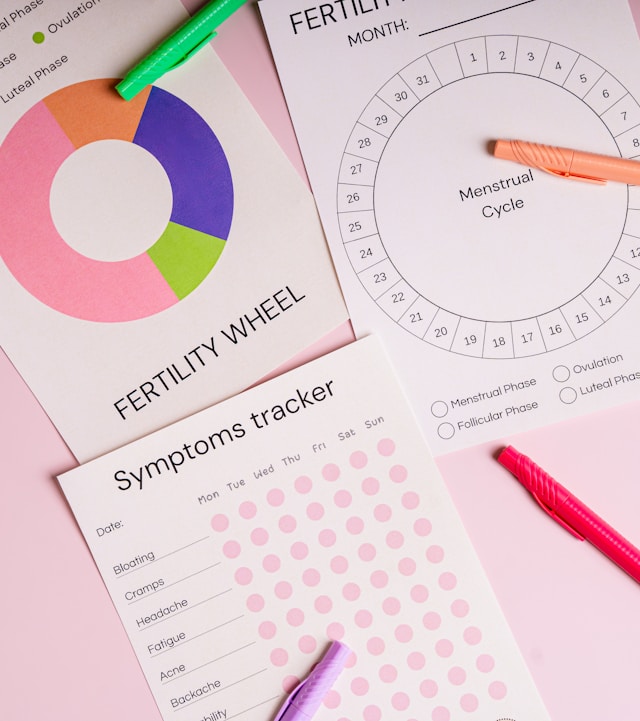
This is the largest category, and it's where most people actually land. Fatigue, mood swings, brain fog, low libido, bloating, and irregular-feeling symptoms are common, rarely urgent, and often genuinely hard to explain from a single conversation or a single lab draw. Eight signs your hormones may be out of balance and what tends to cause a hormonal imbalance in the first place are good starting points for understanding the range of what's considered common rather than urgent.
The reason this tier deserves its own category, rather than being folded into "schedule soon," is that a rushed appointment built around vague symptoms and no data often ends the same way: labs come back "normal," and the symptoms don't go away. That's not because nothing is happening, it's because a single blood draw is a snapshot, and most of these symptoms are driven by patterns that unfold over days or cycles, not a single moment in time. Research on cycle-to-cycle hormonal variability has found that this kind of fluctuation is common and frequently goes undetected by testing that only looks at one point.
If your symptoms fall into this tier, the most useful thing you can do before an appointment isn't necessarily to book one immediately, it's to start building a picture of what's actually happening across a few cycles, so the conversation has something concrete to work from. How to identify and fix a hormonal imbalance covers this process in more depth, including what a useful testing approach looks like.
Why walking in with a pattern changes the conversation
None of this replaces a provider's judgment, and daily hormone tracking isn't a diagnostic tool, it's decision support. But a pattern is a different starting point than a symptom list. Instead of "I've been tired and moody," a provider is working from "here's what my estrogen and progesterone have done across the last three cycles." That's a meaningfully different conversation, and it's part of why so many women who've felt dismissed find that data changes how the visit goes.
Frequently asked questions
When is irregular bleeding a red flag versus normal variation?
Bleeding that soaks through protection hourly for several hours, lasts longer than seven to eight days, or occurs at all after twelve months without a period warrants prompt medical attention. Occasional shifts in cycle length or flow, without those features, are more often normal variation worth monitoring rather than an emergency.
What hormone symptoms should I never wait on?
Severe one-sided pelvic pain with dizziness or shoulder pain, any bleeding after menopause, and signs of significant blood loss like lightheadedness or a racing heart alongside heavy bleeding all warrant same-day care.
My labs came back normal, but I still feel terrible. What should I do?
A normal single-draw result doesn't rule out a pattern that's only visible across multiple days or cycles. Tracking your hormone pattern over time and bringing that data to your next visit is often more useful than repeating the same single test.
How many missed or irregular cycles is worth telling a doctor about?
A single missed or unusually long cycle isn't unusual. A repeated pattern, several cycles outside the typical 21-to-38-day range, or more than one missed period with a negative pregnancy test, is worth scheduling a visit around.
The bottom line
Most hormone symptoms don't need a same-day call. A small, specific set do, heavy or prolonged bleeding, any postmenopausal bleeding, severe one-sided pain, and signs of significant blood loss. Everything else generally falls into either "worth scheduling soon" or "worth tracking first," and knowing which tier you're in changes both how urgently you act and how useful your next appointment turns out to be.
Bring your hormone pattern to your next appointment instead of just your symptoms. Daily tracking shows what a single test can't, the shape of your cycle, not just one point in it. Get your Oova kit →
About the author
Sources
- American College of Obstetricians and Gynecologists Committee Opinion No. 557. "Management of Acute Abnormal Uterine Bleeding in Nonpregnant Reproductive-Aged Women." Obstetrics & Gynecology, 121(4):891–896, 2013.
- American College of Obstetricians and Gynecologists Practice Bulletin No. 128. "Diagnosis of Abnormal Uterine Bleeding in Reproductive-Aged Women." Obstetrics & Gynecology, 120(1), 20122.
About the Oova Blog:
Our content is developed with a commitment to high editorial standards and reliability. We prioritize referencing reputable sources and sharing where our insights come from. The Oova Blog is intended for informational purposes only and is never a substitute for professional medical advice. Always consult a healthcare provider before making any health decisions.