HRT is not the right option for everyone. This guide explains evidence-based non-hormonal approaches to common perimenopause symptoms, including prescription treatments, lifestyle strategies, and symptom-specific support.

HRT is not the right option for everyone. This guide explains evidence-based non-hormonal approaches to common perimenopause symptoms, including prescription treatments, lifestyle strategies, and symptom-specific support.
Right now, it can feel as if every conversation about menopause ends in the same place: hormone replacement therapy.
A friend starts an estrogen patch and finally sleeps through the night. Someone on social media says HRT gave her life back. Headlines celebrate a long-overdue correction to decades of fear and confusion around menopause care.
That progress matters. But it can also leave some women wondering: What if HRT is not an option for me?
Maybe you have a history of breast or endometrial cancer. Maybe you have a blood-clotting disorder, cardiovascular concern, liver condition, or another medical history that makes systemic hormone therapy a more complicated decision. Maybe you tried HRT and did not tolerate it well. Or maybe you simply do not want to take hormones.
Whatever the reason, you are not shut out of treatment. You have not missed the only path to feeling better.
Hormone therapy is considered the most effective treatment for hot flashes and night sweats, but it is not the only evidence-based option. There are non-hormonal medications, behavioral treatments, and symptom-specific approaches that can make a meaningful difference.
The challenge is knowing which options are supported by evidence, which symptoms they actually treat, and how to tell whether they are helping you.
Start with the symptom, not the treatment
Perimenopause is not one symptom, and no single treatment addresses every part of it.
Hot flashes and night sweats have different treatment options from vaginal dryness. Insomnia that continues even when night sweats improve may need a different approach. Mood changes, brain fog, joint pain, and fatigue can also have multiple causes.
Before choosing a treatment, get specific about what you are trying to change:
- How often are your hot flashes occurring?
- Are night sweats waking you up, or are you struggling to sleep even without them?
- Are mood changes new, cyclical, or constant?
- Are vaginal symptoms affecting comfort, urination, or sex?
- Which symptom is having the greatest effect on your daily life?
- Did the symptoms begin alongside changes in your cycle?
If your symptoms feel disconnected or difficult to explain, it may help to understand why hormone results can look normal even when you still feel terrible. A single test captures one moment. Perimenopause is often defined by variability, which makes symptom timing and patterns particularly important.
Want a clearer starting point? Discover your hormone baseline with Oova and bring your patterns, symptoms, and questions into your next provider conversation.
Which non-hormonal treatments are supported by evidence?
The North American Menopause Society’s (NAMS) 2023 Nonhormone Therapy Position Statement evaluated treatments specifically for vasomotor symptoms, meaning hot flashes and night sweats.
Its recommended non-hormonal options include:
- Cognitive behavioral therapy
- Clinical hypnosis
- Certain SSRIs and SNRIs
- Gabapentin
- Fezolinetant
- Oxybutynin
- Weight loss for some patients
- Stellate ganglion block in select circumstances
Elinzanetant, sold under the brand name Lynkuet, was approved by the FDA in 2025 and therefore was not included in the 2023 statement.
Importantly, this evidence applies specifically to hot flashes and night sweats. It does not mean every option treats every perimenopause symptom.
The same statement did not recommend several commonly suggested approaches for vasomotor symptoms based on the available evidence, including exercise, yoga, mindfulness-based interventions, cooling techniques, soy products, acupuncture, clonidine, and many supplements.
That does not mean exercise, stress management, or nutritious food are unimportant. They can support cardiovascular health, bone strength, sleep, mood, and overall well-being. It means they have not consistently been shown to treat hot flashes themselves.
Non-hormonal prescription options for hot flashes and night sweats
Several medications can reduce vasomotor symptoms without replacing estrogen or progesterone. They work through different pathways and have different side effects, interactions, and monitoring requirements.
Fezolinetant
Fezolinetant, sold as Veozah, was the first FDA-approved neurokinin-3 receptor antagonist for moderate to severe hot flashes caused by menopause.
Instead of replacing estrogen, it acts on a signaling pathway in the brain involved in temperature regulation. This makes it a fundamentally different option from systemic hormone therapy.
Fezolinetant also carries an FDA boxed warning for rare but serious liver injury. Its prescribing information requires liver testing before treatment and at specified points during treatment. It should not be combined with CYP1A2 inhibitors, and it is not appropriate for everyone with liver or kidney disease.
This does not mean the medication is inherently unsafe. It means the potential benefit needs to be considered alongside its monitoring requirements, contraindications, and your individual medical history.
Elinzanetant
Elinzanetant, sold as Lynkuet, is a dual NK1 and NK3 receptor antagonist approved by the FDA on October 24, 2025 for moderate to severe vasomotor symptoms due to menopause.
Because its approval came after the 2023 NAMS position statement, it is not included in that guidance. Its prescribing information includes considerations related to liver function, daytime sleepiness, pregnancy, seizure history, and medication interactions.
If pregnancy is still possible during perimenopause, that is particularly important: Lynkuet is contraindicated during pregnancy, and its label calls for pregnancy exclusion before treatment.
SSRIs and SNRIs
Certain selective serotonin reuptake inhibitors and serotonin-norepinephrine reuptake inhibitors can reduce hot flashes. These medications are commonly associated with depression and anxiety treatment, but their effect on hot flashes is separate from their effect on mood.
Low-dose paroxetine (sold as Brisdelle) is FDA-approved for moderate to severe vasomotor symptoms. Other SSRIs and SNRIs, including venlafaxine, may be prescribed off-label.
They may be particularly relevant when hot flashes occur alongside mood or anxiety symptoms, but they still require an individualized medication review. Side effects can include nausea, sleep changes, sexual side effects, and changes in blood pressure, depending on the medication.
Medication interactions also matter. For example, some SSRIs can interfere with tamoxifen metabolism, so patients taking tamoxifen should review the specific medication with their oncology and menopause care teams.
Gabapentin
Gabapentin was originally developed to treat seizures and nerve pain, but it can also reduce hot flashes. Because it can cause sleepiness, it may be considered when nighttime symptoms are especially disruptive.
Dizziness and sedation can also make it a poor fit for some people. The right dose and timing should be determined with a clinician.
Oxybutynin
Oxybutynin is primarily used for overactive bladder but has also shown benefit for hot flashes. It can cause anticholinergic side effects such as dry mouth, constipation, blurred vision, and difficulty urinating.
Its risks and benefits deserve particular consideration in older adults and in anyone already taking other medications with anticholinergic effects.
What about sleep?
Sleep problems during perimenopause do not all have the same cause.
For some women, the problem is obvious: a night sweat causes an awakening, followed by difficulty falling back asleep. For others, insomnia persists even on nights without hot flashes. Anxiety, restless legs, sleep apnea, medication effects, alcohol, and changes in sleep patterns can also play a role.
This distinction matters because treating hot flashes may improve sleep when hot flashes are causing the awakenings, but it may not resolve an independent sleep disorder.
Cognitive behavioral therapy can reduce how disruptive hot flashes and night sweats feel. Cognitive behavioral therapy for insomnia, usually called CBT-I, is a separate structured treatment designed specifically for insomnia.
CBT-I may include techniques that strengthen the association between bed and sleep, adjust time spent awake in bed, and address thoughts or behaviors that perpetuate insomnia. It is more involved than receiving a list of sleep-hygiene tips, but it has a stronger evidence base for chronic insomnia.
If you regularly wake at the same time overnight, our guide to waking up at 3 a.m. during perimenopause explores why hormone changes may be one piece of a more complicated sleep pattern.
What about mood, anxiety, and brain fog?
Mood symptoms during perimenopause can range from feeling more irritable before a period to persistent anxiety or depression that affects work, relationships, or daily functioning.
SSRIs and SNRIs may be considered when mood symptoms and hot flashes occur together, but treatment should be based on the full clinical picture. Not every mood change during perimenopause is caused by hormones, and not every antidepressant is equally suited to every patient.
Brain fog can be especially frustrating because it is not one clearly defined medical condition. Poor sleep, depression, anxiety, medication effects, thyroid disorders, iron deficiency, and other health issues can all affect concentration and memory.
If anxiety, insomnia, and physical symptoms seem to arrive together, read more about why anxiety, insomnia, and heart palpitations can overlap during perimenopause.
Seek help promptly for severe depression, thoughts of self-harm, sudden cognitive changes, or symptoms that make it difficult to function safely.
Non-hormonal options for vaginal dryness and discomfort
Vaginal dryness, burning, irritation, painful sex, and some urinary symptoms can fall under genitourinary syndrome of menopause, or GSM.
For milder symptoms, genuinely non-hormonal options include:
- Vaginal moisturizers used regularly
- Lubricants used during sexual activity
- Pelvic floor physical therapy when muscle tightness, weakness, or pain is involved
- Vaginal dilators when recommended by a qualified clinician
- Evaluation for infections, skin conditions, or other causes when symptoms persist
Lubricants and moisturizers do different jobs. Lubricants reduce friction during sexual activity. Moisturizers are used consistently to help maintain vaginal moisture over time.
Low-dose vaginal estrogen is a different category. It is hormonal, but it is delivered locally and generally results in much lower systemic exposure than oral or transdermal hormone therapy. Many patients who cannot use systemic HRT may still be candidates for local vaginal estrogen, but that decision should be made with a clinician and, when relevant, an oncology team.
This distinction is important. “I cannot take systemic HRT” does not automatically answer whether every local hormonal treatment is inappropriate.
Do natural alternatives to HRT work?
“Natural” can mean many different things, from exercise and dietary changes to herbal supplements marketed specifically for menopause.
Some lifestyle strategies may support health during perimenopause:
- Resistance and weight-bearing exercise can support muscle and bone health.
- Regular movement can support mood, sleep, and cardiovascular health.
- Reducing alcohol may improve sleep or reduce symptom triggers for some people.
- Adequate protein and overall nutrition can support muscle maintenance.
- Stress-management practices may improve coping and quality of life.
Those are worthwhile benefits. But they should not be presented as proven replacements for treatments that reduce moderate to severe hot flashes.
Evidence for supplements and herbal products is inconsistent. Products can also vary in purity, dose, and formulation, and “natural” does not mean free from side effects or medication interactions.
If you use supplements, include them when reviewing your medications with a clinician. This is particularly important during cancer treatment, while taking anticoagulants, or when using medications processed through the same liver pathways.
For a wider view of available approaches, see our guide to perimenopause treatment and how to know whether it is helping.
How do you choose among the options?
There is no universal best non-hormonal perimenopause treatment. The best fit depends on the symptom, your medical history, your other medications, and the trade-offs that matter most to you.
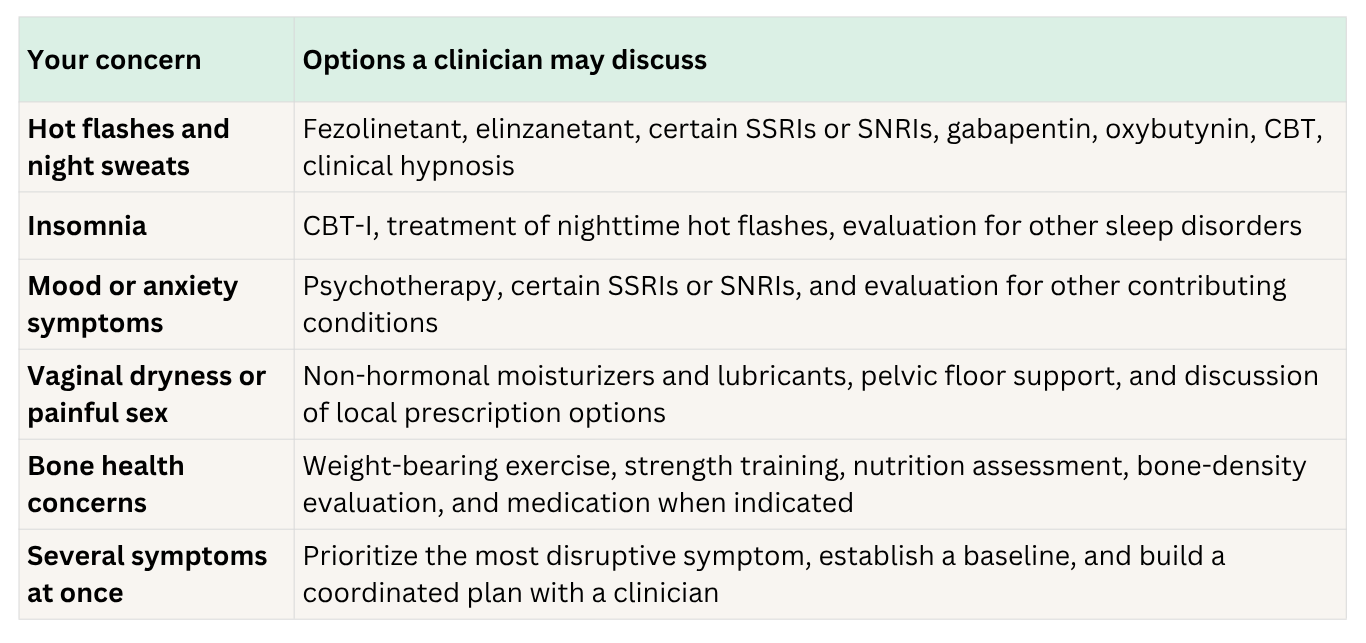
The goal is not necessarily to find one treatment that fixes everything. It may be to build a manageable plan that targets the symptoms affecting you most.
How can you tell whether a treatment is working?
When symptoms fluctuate naturally, it is surprisingly difficult to judge whether a new intervention is helping.
One good night can make a treatment feel transformative. One difficult week can make it feel useless. Neither may represent the overall pattern.
Before starting something new, document a baseline:
- Hot flashes per day
- Night sweats per week
- Number of nighttime awakenings
- Sleep quality
- Mood or anxiety severity
- Vaginal or urinary symptoms
- Cycle timing and bleeding changes
- Medications and supplements
- The date the treatment started
- Side effects
- Changes in daily functioning
Then decide in advance what improvement would actually matter to you. Is success fewer hot flashes, less severe episodes, more uninterrupted sleep, better concentration, or being able to get through the workday without symptoms taking over?
Our guide to tracking whether a hormone treatment or lifestyle change is working explains how to establish a baseline and evaluate change without overinterpreting a few isolated days.
Where hormone tracking fits, and where it does not
Most non-hormonal treatments do not work by increasing estrogen or progesterone. A medication can reduce hot flashes without making your hormone levels look different.
That means hormone tracking should not be used as the primary measure of whether a non-hormonal treatment is working. Symptoms, functioning, side effects, and quality of life matter more.
Hormone patterns can still provide useful context, particularly when symptoms feel unpredictable or your cycles are changing. Oova measures urinary E3G, LH, and PdG over time while allowing you to track symptoms alongside those patterns. This can help you see whether symptoms consistently appear during particular hormonal or cycle changes and give your provider a clearer longitudinal picture than memory alone.
Oova does not determine which treatment you should take. It helps turn "I feel different, but I cannot explain when or why" into a more organized record of what is happening over time.
If you are preparing to discuss your options, start with what to track before your menopause appointment. You can also explore the four perimenopause hormone patterns to understand why the transition can look so different from one person to another.
Questions to bring to your provider
You do not need to arrive knowing which medication you want. It may be more useful to arrive knowing what you want help with.
Consider asking:
- Which of my symptoms is this treatment expected to improve?
- How long should it take before I notice a difference?
- What side effects should I watch for?
- Does this interact with any of my current medications or supplements?
- Do I need bloodwork or other monitoring?
- Could another condition be contributing to these symptoms?
- What should we try next if this option does not help?
- Is local vaginal treatment an option if systemic hormones are not appropriate for me?
- How should we measure whether the treatment is working?
Having a record of your symptoms, cycle changes, current medications, and previous treatment attempts can make that conversation much more productive.
You have not missed your chance to feel better
The current excitement around HRT has helped correct years of misinformation and under-treatment. But it has also made HRT feel, at times, like the only meaningful path through perimenopause.
It is not.
If you cannot take HRT, did not tolerate it, or simply do not want it, you still deserve a serious treatment conversation. You deserve more than being told to sleep with a fan, drink less coffee, or wait for the symptoms to pass.
The right plan may involve medication. It may involve behavioral treatment, targeted vaginal care, sleep support, or several approaches used together. Finding that plan may take more work than applying one patch, and it may require a clinician who understands the full range of options.
But there are options. You have not missed the “golden ticket.” You are not out of choices.
Frequently Asked Questions
What non-hormonal options are available if I cannot take HRT?
Evidence-supported options for hot flashes and night sweats include cognitive behavioral therapy, clinical hypnosis, certain SSRIs and SNRIs, gabapentin, fezolinetant, elinzanetant, and oxybutynin. The best option depends on your symptoms, medical history, medications, and preferences.
What is the best non-hormonal treatment for hot flashes?
There is no single best treatment for everyone. Fezolinetant and elinzanetant are FDA-approved non-hormonal options specifically for moderate to severe vasomotor symptoms. Certain SSRIs and SNRIs, gabapentin, oxybutynin, CBT, and clinical hypnosis may also be considered.
Is clonidine effective for hot flashes?
The North American Menopause Society’s 2023 position statement does not recommend clonidine for vasomotor symptoms based on the available evidence.
Can perimenopause be managed without hormones?
Many perimenopause symptoms can be treated without systemic hormone therapy. Different symptoms may require different approaches, and some people benefit from combining medication, behavioral treatment, sleep support, vaginal care, and lifestyle measures.
What helps perimenopause sleep problems without HRT?
The right treatment depends on what is disturbing sleep. Treating hot flashes may help when night sweats cause awakenings. CBT-I is specifically designed to treat insomnia. A clinician may also evaluate for sleep apnea, restless legs, medication effects, anxiety, or other contributors.
Are there non-hormonal options for vaginal dryness?
Yes. Vaginal moisturizers and lubricants are non-hormonal options. Pelvic floor physical therapy may also help some symptoms. Low-dose vaginal estrogen is hormonal but differs from systemic HRT and may still be considered for some patients through shared decision-making.
Do natural alternatives to HRT work?
Lifestyle changes can support sleep, mood, muscle, bone, and cardiovascular health, but most have not consistently been shown to treat moderate to severe hot flashes. Evidence for supplements and herbal products is mixed, and they can have side effects or medication interactions.
How can I tell whether a treatment is working?
Track the symptoms the treatment is intended to improve, including frequency, severity, sleep disruption, side effects, and daily functioning. Compare them with a documented baseline over the timeframe recommended by your clinician.
When should perimenopause symptoms be evaluated by a clinician?
Speak with a clinician whenever symptoms meaningfully disrupt sleep, work, relationships, sex, or daily functioning, and before starting a prescription treatment. Unexpected bleeding, severe mood symptoms, chest pain, fainting, or sudden neurological symptoms require prompt medical evaluation.
About the author
Sources
- The Menopause Society. The 2023 Nonhormone Therapy Position Statement. Menopause. 2023;30(6):573-590.
- U.S. Food and Drug Administration. FDA adds a boxed warning for rare serious liver injury with Veozah. Updated December 16, 2024.
- U.S. Food and Drug Administration. Veozah prescribing information. Revised December 2024.
- U.S. Food and Drug Administration. Lynkuet prescribing information. Revised October 2025.
- The Menopause Society. Genitourinary Syndrome of Menopause MenoNote. May 2025.
- Green SM, et al. Cognitive behavior therapy for menopausal symptoms: A randomized controlled trial. Menopause. 2019.
- Krieger L. Millions of Women Are Left Out of Menopause’s Moment. The New York Times. June 15, 2026. Included for patient experience and cultural context, not clinical guidance.
About the Oova Blog:
Our content is developed with a commitment to high editorial standards and reliability. We prioritize referencing reputable sources and sharing where our insights come from. The Oova Blog is intended for informational purposes only and is never a substitute for professional medical advice. Always consult a healthcare provider before making any health decisions.