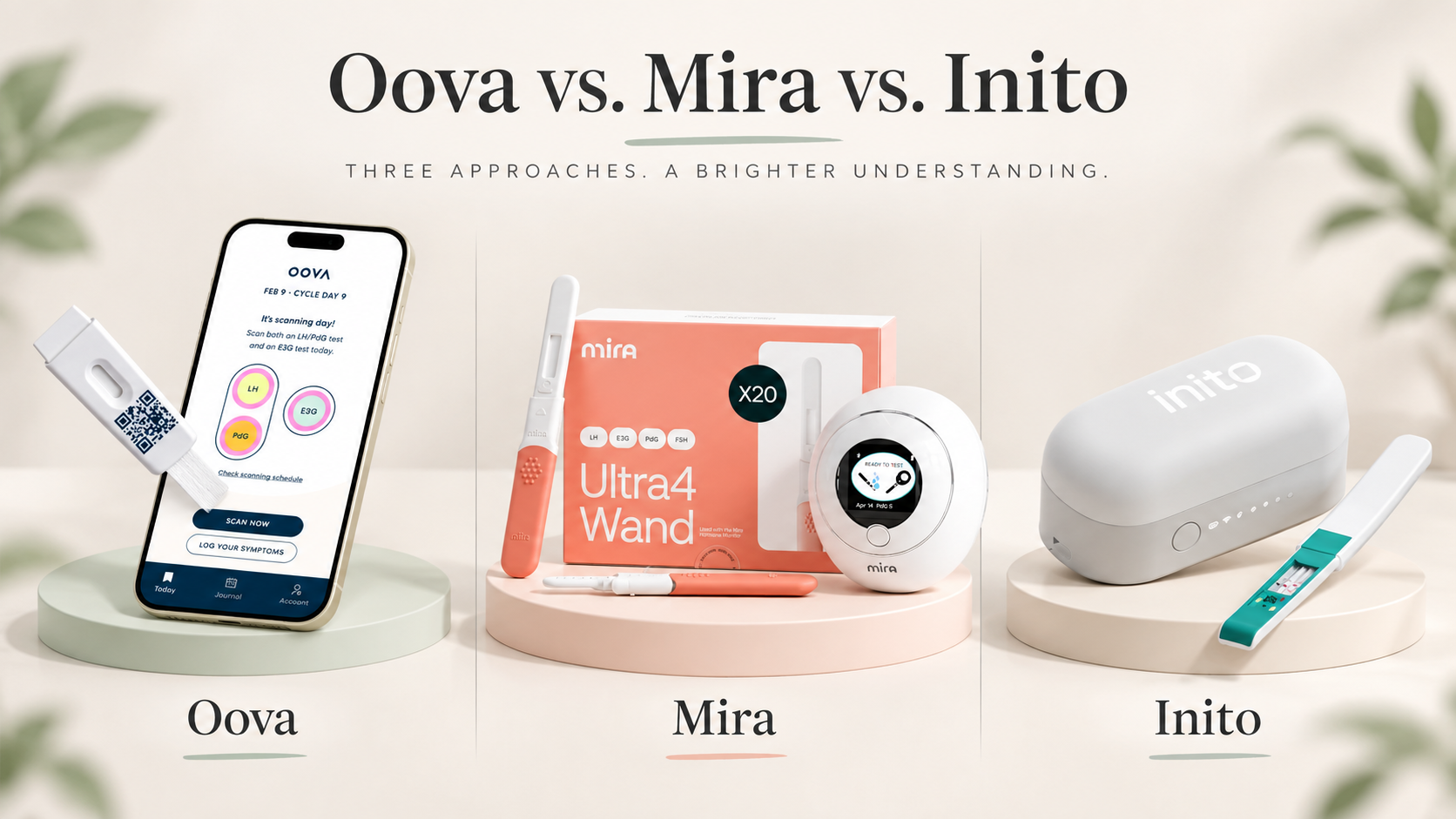
Most women have never seen what a healthy hormone pattern actually looks like. They know their symptoms. They know something feels off. But they've never had a reference point for what normal estrogen, progesterone, and LH should be doing, day by day. This guide closes that gap: what each hormone does, what a textbook healthy cycle looks like, the five most common patterns that fall outside normal.

Most women have never seen what a healthy hormone pattern actually looks like. They know their symptoms. They know something feels off. But they've never had a reference point for what normal estrogen, progesterone, and LH should be doing, day by day. This guide closes that gap: what each hormone does, what a textbook healthy cycle looks like, the five most common patterns that fall outside normal.
If you've ever looked at a hormone test result and wondered what it actually means for you, not for the reference range, not for an "average" woman, but for you, across the days and weeks of your actual cycle, you're asking exactly the right question. And most women never get a real answer to it.
The problem isn't that the science isn't there. It's that most hormone information is delivered as a snapshot: a single number on a single day, measured against a broad population range that was never designed to capture how your hormones move. Understanding what healthy hormone levels actually look like requires thinking in patterns, not points. And that's a different kind of education than most women have been given.
This guide gives you that foundation: what your three key reproductive hormones are doing in each phase of your cycle, what a healthy pattern looks like week by week, the five most common patterns that fall outside normal, and what it actually takes to know whether yours are one of them.
The Three Hormones That Drive Your Cycle
Before looking at what healthy levels are, it's worth being clear on what each hormone is actually doing, and why all three matter together, not in isolation.
Estrogen (measured as estradiol, or E2) is the primary estrogen in reproductive-age women. It builds the uterine lining in the first half of your cycle, drives the LH surge that triggers ovulation, and supports mood, sleep, bone density, and cognitive clarity. Estrogen doesn't hold steady, it peaks twice per cycle, with a sharp peak just before ovulation and a smaller secondary peak in the luteal phase. Understanding those peaks is critical to understanding your pattern. Our guide to what your estrogen levels should be during your cycle covers the full reference ranges and what deviations from them mean.
Progesterone (measured as PdG in urine, P4 in blood) is produced almost entirely by the corpus luteum after ovulation, meaning it only rises if you actually ovulated. It prepares the uterine lining for implantation, stabilizes mood, supports sleep, and acts as a counter-regulatory balance to estrogen. If progesterone is low, absent, or poorly sustained in the second half of your cycle, you'll often feel it before any test confirms it: anxiety, sleep disruption, spotting before your period, a luteal phase that feels shorter than it should. Our breakdown of low vs. high progesterone symptoms explains what that imbalance can look and feel like in daily life.
LH (luteinizing hormone) is the surge hormone. It rises sharply in the 24–48 hours before ovulation, triggering the release of the egg. Outside of that surge window, LH stays relatively quiet. A positive ovulation test detects that LH surge, but as we cover in why OPK limitations matter for fertility tracking, an LH surge confirms your body attempted ovulation, not that ovulation was successful or that the subsequent progesterone response was adequate.
These three hormones don't operate independently. Their relationship to each other, the estrogen-to-progesterone ratio, the timing and magnitude of the LH surge, the adequacy of the luteal progesterone rise, is where meaningful clinical signal lives. That ratio is what users consistently ask about: knowing their estrogen is at a certain level tells them much less than knowing how it relates to their progesterone on the same day. The ratio matters more than either number alone.
What a Healthy Hormone Pattern Looks Like, Phase by Phase
A typical menstrual cycle runs 24–35 days, with wide variation in what's normal. What makes a pattern healthy isn't hitting a specific number on a specific day, it's the shape of how each hormone moves across the cycle. Here's what that shape should look like.
Menstruation (Days 1–5)
When your period begins, estrogen and progesterone are at their lowest. The corpus luteum from your previous cycle has broken down, progesterone has dropped, and the uterine lining sheds in response. This is baseline, the hormonal reset point.
Healthy baseline estrogen (E2): roughly 20–80 pg/mL in blood, or low E3G in urine Healthy baseline progesterone: under 1 ng/mL (blood), PdG typically under 5 µg/mg creatinine in urine LH: low (typically under 10 mIU/mL), no surge activity
Symptoms like cramping, fatigue, and lower mood at this phase are largely driven by prostaglandins and the progesterone withdrawal from the previous luteal phase, not hormonal imbalance. If your period is extremely heavy, very painful, or accompanied by significant mood disruption, those are data points worth tracking, but not automatically signs that baseline estrogen or progesterone are problematic.
Follicular Phase (Days 1–13, approximately)
After menstruation, the brain signals the ovaries to begin preparing follicles for the next ovulation. FSH (follicle-stimulating hormone) rises, stimulating follicle development. As follicles develop, they produce estrogen, and estrogen begins its climb toward ovulation.
This is typically when women feel their best: rising estrogen supports mood, energy, cognitive clarity, and libido. The follicular phase length is also the most variable part of the cycle. If you have a longer-than-average cycle, it's almost always because your follicular phase is longer, not your luteal phase, which tends to be more consistent. Our piece on what's happening hormonally in the follicular phase explains how estrogen's rise in this window affects how you feel and function day to day.
Healthy mid-follicular estrogen (E2): rising steadily from 50–100 pg/mL toward 150–200+ pg/mL Progesterone: still low, under 1–2 ng/mL LH: low and stable, beginning a gradual rise toward the surge
A red flag at this stage: estrogen that's already elevated relative to progesterone before ovulation, or a follicular phase that's very short, can reflect an abnormal hormonal environment even when individual numbers appear to be "in range."
Ovulation (Mid-cycle, typically Days 12–16)
The LH surge is the most dramatic hormonal event of the cycle. In the 12–36 hours before ovulation, LH rises sharply, often 2–5x above baseline. This triggers the mature follicle to rupture and release the egg. Simultaneously, estrogen reaches its first cycle peak immediately before the surge, then drops briefly before rising again in the early luteal phase.
Healthy LH surge: typically 21–80 mIU/mL (blood) at peak; the rise from baseline matters as much as the absolute number Estrogen at LH peak: often 150–400+ pg/mL (E2), reflecting follicle maturity Progesterone: still low at this moment, the rise comes after ovulation, not before
This is the moment OPKs are designed to capture. But the LH surge is only the beginning of the fertility story. What happens next, whether the corpus luteum forms and produces adequate progesterone, is what determines whether the cycle is truly ovulatory. Understanding the biology of the LH surge explains why this matters for much more than just timing intercourse.
Luteal Phase (Days 15–28, approximately)
After ovulation, the ruptured follicle transforms into the corpus luteum, which produces progesterone. This is the most clinically important part of the cycle for diagnosing hormonal issues, and the part most often missed by standard single-draw hormone tests.
A healthy luteal phase is characterized by a sustained, meaningful progesterone rise that peaks around 7 days after ovulation (often called "day 21" in blood testing, though this assumes a textbook 28-day cycle with ovulation on day 14, an assumption that fails many women). Estrogen also rises for a second, smaller peak in the early luteal phase before both hormones decline together at cycle's end.
Healthy mid-luteal progesterone: 10–20+ ng/mL (blood); PdG above 7.9 µg/mg creatinine in urine is the confirmatory threshold for ovulation Healthy luteal estrogen (E2): 50–250 pg/mL, with a secondary peak followed by decline LH: returns to low baseline, no surge activity
The shape of the progesterone curve matters as much as the peak. A pattern where progesterone rises adequately but drops too early creates a different symptom picture than a pattern where it never rises high enough. Both differ from a pattern where progesterone is genuinely absent, indicating anovulation, even if the cycle appeared normal from the outside. Our guide to confirming ovulation at home explains exactly what it takes to know whether your luteal progesterone response was adequate.
The Five Hormone Patterns That Fall Outside Normal
Most women who sense something is off hormonally are right. The challenge is that "off" can mean very different things depending on which hormone is involved, which phase of the cycle it affects, and whether the problem is a single hormone or a ratio between two. Here are the five patterns most commonly driving unexplained symptoms.
1. Low Progesterone in the Luteal Phase
This is the most common hormonal issue in reproductive-age women, and it's routinely missed because most blood tests are timed incorrectly or taken as single draws. Low luteal progesterone looks like: spotting in the week before your period, a shorter second half of your cycle (under 10–11 days), anxiety or sleep disruption that arrives predictably in the second half of the month, and difficulty sustaining early pregnancy.
A "day 21" blood draw can show normal progesterone in a woman with a 35-day cycle who ovulated on day 21, because her day 21 is actually the day she ovulated, not seven days post-ovulation. Daily tracking across the luteal phase shows the actual curve, not a single point that may or may not be timed to the peak. Our full guide to what progesterone is and its role in your cycle covers this mechanism in depth.
2. Estrogen Dominance
Estrogen dominance isn't always high estrogen in absolute terms, it can be a ratio problem, where estrogen is elevated relative to progesterone during the luteal phase. The result is a hormonal environment that drives heavy or long periods, bloating, breast tenderness, mood instability, and weight gain that's disproportionate to diet and activity. Women with PCOS, thyroid dysfunction, or excess body fat may have estrogen dominance patterns even with labs that look "normal" on a single draw. Our guide to the five hormone patterns that explain your symptoms covers estrogen dominance alongside the other four patterns most commonly behind unexplained symptoms.
3. Anovulatory Cycles
Anovulation, cycles where ovulation doesn't occur or is incomplete, is more common than most women realize. Real-world data from over 4,900 women tracked by Oova found that hormonal variability across cycles is far more widespread than previously understood. In an anovulatory cycle, the LH surge may occur but not trigger follicle rupture. Estrogen may rise and fall. But without ovulation, there's no corpus luteum, and therefore no progesterone rise. The cycle looks normal from the outside, regular timing, normal-looking period, but the hormonal pattern tells a different story.
Anovulatory cycles can result from stress, under-fueling, thyroid dysfunction, elevated prolactin, or PCOS. They're invisible on a single blood draw if that draw doesn't capture the luteal phase adequately. And they have direct implications for fertility, cycle health, and long-term bone and cardiovascular health, because progesterone is doing much more than preparing the uterus for pregnancy.
4. Elevated Baseline LH (Especially with PCOS)
In women with PCOS, LH is often elevated throughout the cycle, not just at ovulation. This creates a distorted LH-to-FSH ratio that disrupts normal follicle development and can either prevent ovulation or make LH-based ovulation tests nearly impossible to interpret, the LH "baseline" is so high that the surge doesn't look like a surge. This is one of the central reasons standard OPKs are unreliable for women with PCOS, and why understanding whether you have anovulatory or ovulatory PCOS changes everything when you're trying to conceive.
5. Cycle-to-Cycle Variability That's Wider Than Expected
Your hormone pattern may look different from cycle to cycle in ways that don't indicate pathology but do indicate instability. Stress, sleep disruption, illness, or significant changes in exercise or food intake can all shift the timing and magnitude of hormonal events within your cycle. A single "good" cycle doesn't establish that your pattern is consistently healthy. And a single difficult cycle doesn't prove a chronic imbalance. This is why tracking across multiple cycles, not just one, is the only way to distinguish a genuine pattern from normal variation.
Why Standard Hormone Tests Miss Most of This
If your blood test came back normal, it doesn't mean your pattern is normal. It means one point in time, drawn on one day, fell within a broad population reference range. That's useful clinical information in some contexts, but it's a different thing from understanding how your hormones are actually moving across your cycle.
The core limitations, covered in detail in our guide to what standard hormone tests actually miss:
Timing is assumed, not verified. "Day 3" FSH and estradiol assume a standard cycle length and a standard follicular phase. "Day 21" progesterone assumes you ovulated on day 14. Neither assumption holds for a large proportion of women.
Single-point data misses the curve. A progesterone of 8 ng/mL on day 21 looks "normal" by reference range, but if you ovulated on day 10, that draw is 11 days post-ovulation and should be much higher. The number is meaningless without knowing where you are in the luteal phase.
Reference ranges are population-level, not individual. "Normal" means within two standard deviations of a population mean. It doesn't mean optimal for you, or even adequate for your specific hormonal context.
Ratios aren't reported. A lab result showing estradiol of 150 pg/mL and progesterone of 2 ng/mL in the mid-luteal phase won't flag anything unusual, but the ratio between those two numbers is clinically significant, and it's something you'd only see if you were tracking both hormones continuously.
The gap between "normal labs" and "something is clearly wrong" is exactly where most women with hormonal symptoms spend years without answers. Our guide to why your hormones look normal but you still feel terrible is written specifically for that experience.
What Daily Hormone Tracking Actually Shows You
The shift from single-point testing to continuous daily data changes what you can see, and what questions you can actually answer.
With daily tracking across a full cycle, ideally, multiple cycles, you can determine: whether you ovulated and on which day; whether your LH surge was followed by an actual hormonal confirmation of ovulation; whether your progesterone rose adequately and sustained long enough; whether your estrogen-to-progesterone ratio in the luteal phase is balanced; whether your cycle-to-cycle variability is within a normal range or trending in a concerning direction; and whether an intervention, lifestyle change, supplementation, or medical treatment, is actually moving your numbers.
That last point is underappreciated. Millions of women are taking supplements for hormone balance with no way to know whether their hormone levels are actually changing. Daily tracking turns "I think this is helping" into "my progesterone rose from an average of 6 to an average of 11 in the luteal phase over two cycles." That's a different kind of evidence, and it's the foundation of our step-by-step guide to fixing a hormonal imbalance, which explains how tracking fits into a real diagnostic and treatment workflow.
How to Know If Your Pattern Isn't Normal
There's no single day you should test to understand your hormone pattern. But there are signals worth paying attention to across your cycle:
In the follicular phase: estrogen that rises very slowly or not at all, combined with a longer-than-usual cycle, can suggest inadequate follicular development.
Around ovulation: an LH surge that's hard to detect, lasts longer than 48–72 hours, or doesn't produce a clear peak can suggest the test is picking up background LH noise rather than a true ovulatory surge, which is especially common in PCOS. Understanding how to confirm ovulation with PCOS is a different challenge than confirming it in a regular cycle.
In the luteal phase: progesterone that never clearly rises above 7–10 ng/mL in blood (or PdG above 7.9 µg/mg creatinine in urine), or that rises adequately but drops earlier than day 10–11 post-ovulation, is a meaningful finding.
Across multiple cycles: the same problem recurring, a short luteal phase every cycle, a progesterone peak that's consistently low, an LH surge that doesn't confirm ovulation, is clinically more significant than a single outlier cycle.
The Bottom Line
A hormone panel from a single blood draw can tell your doctor whether something is dramatically out of range. It cannot tell you whether your hormonal pattern is healthy. Those are two different questions, and for most women experiencing unexplained symptoms, the second question is the one that actually matters.
A healthy hormone pattern isn't a single number. It's the shape of how estrogen builds and peaks before ovulation, the size and timing of the LH surge, the adequacy of the progesterone rise that follows, and the balance between estrogen and progesterone across the luteal phase. It's something you can only see with data that spans the whole cycle, ideally, several cycles, not a single point in time.
If you've been told your hormones are normal and you still don't feel like yourself, that's not a contradiction. It's a data gap. And it's closable.
Oova tracks estrogen, LH, and progesterone daily, across your full cycle, so you can see your actual hormone pattern, not just a single snapshot. FSA/HSA eligible. Start tracking your hormones →
About the author
Sources
- Reed BG, Carr BR. The Normal Menstrual Cycle and the Control of Ovulation. Endotext. 2018. PMID: 25905282.
- Prior JC. Progesterone for Symptomatic Perimenopause Treatment. Facts Views Vis Obgyn. 2011;3(2):109–120.
- Filicori M et al. Luteinizing hormone activity in menotropins optimizes folliculogenesis and treatment in controlled ovarian stimulation. J Clin Endocrinol Metab. 2002;87(4):1497–1508.
- Schliep KC et al. Luteal phase deficiency in regularly menstruating women: prevalence and overlap in identification based on clinical and biochemical diagnostic criteria. J Clin Endocrinol Metab. 2014;99(6):E1007–E1014.
- Vigil P et al. Endocrine modulation of the human menstrual cycle. Linacre Q. 2017;84(3):298–317.
- Holesh JE, Bass AN, Lord M. Physiology, Ovulation. StatPearls [Internet]. 2023. PMID: 28613727.
- Mumford SL et al. Serum progesterone concentrations after ovulation and conception success. BMJ Open. 2016;6(2):e010192.
- Divaraniya A et al. Real-world hormonal variability across menstrual cycles: data from 4,900+ women. Oova Internal Research. 2026.
- Teede HJ et al. Recommendations from the 2023 International Evidence-based Guideline for the Assessment and Management of Polycystic Ovary Syndrome. J Clin Endocrinol Metab. 2023;108(10):2447–2469.
About the Oova Blog:
Our content is developed with a commitment to high editorial standards and reliability. We prioritize referencing reputable sources and sharing where our insights come from. The Oova Blog is intended for informational purposes only and is never a substitute for professional medical advice. Always consult a healthcare provider before making any health decisions.